
How to Choose a Stainless Steel Hot Tub
How to Choose a Stainless Steel Hot Tub — Wellness
A polished shell tells you little about how a hot tub will perform. Learn which steel specifications, comfort features and installation details to verify so you can compare options and avoid costly surprises.
A stainless steel hot tub can be an appealing choice if you want a metal finish, a distinctive backyard design and a shell built for long-term use. But the material name alone does not tell you how comfortable, efficient or corrosion-resistant the finished tub will be.
The best purchase starts with verifying the shell construction, then comparing water-care requirements, insulation, seating and installation costs. A polished exterior is easy to admire. The more useful question is whether the complete system fits your home and the way you plan to use it.
Confirm What Is Actually Made of Stainless Steel
Some hot tubs have a stainless-steel interior basin. Others use the material only for exterior panels, trim, jets or handrails. These are different products, even if their descriptions emphasize the same metal.
Ask the seller to identify the material of the water-contact shell, not just the cabinet. Request the steel grade, shell thickness and construction details in writing. A specification that simply says “stainless” leaves important questions unanswered.
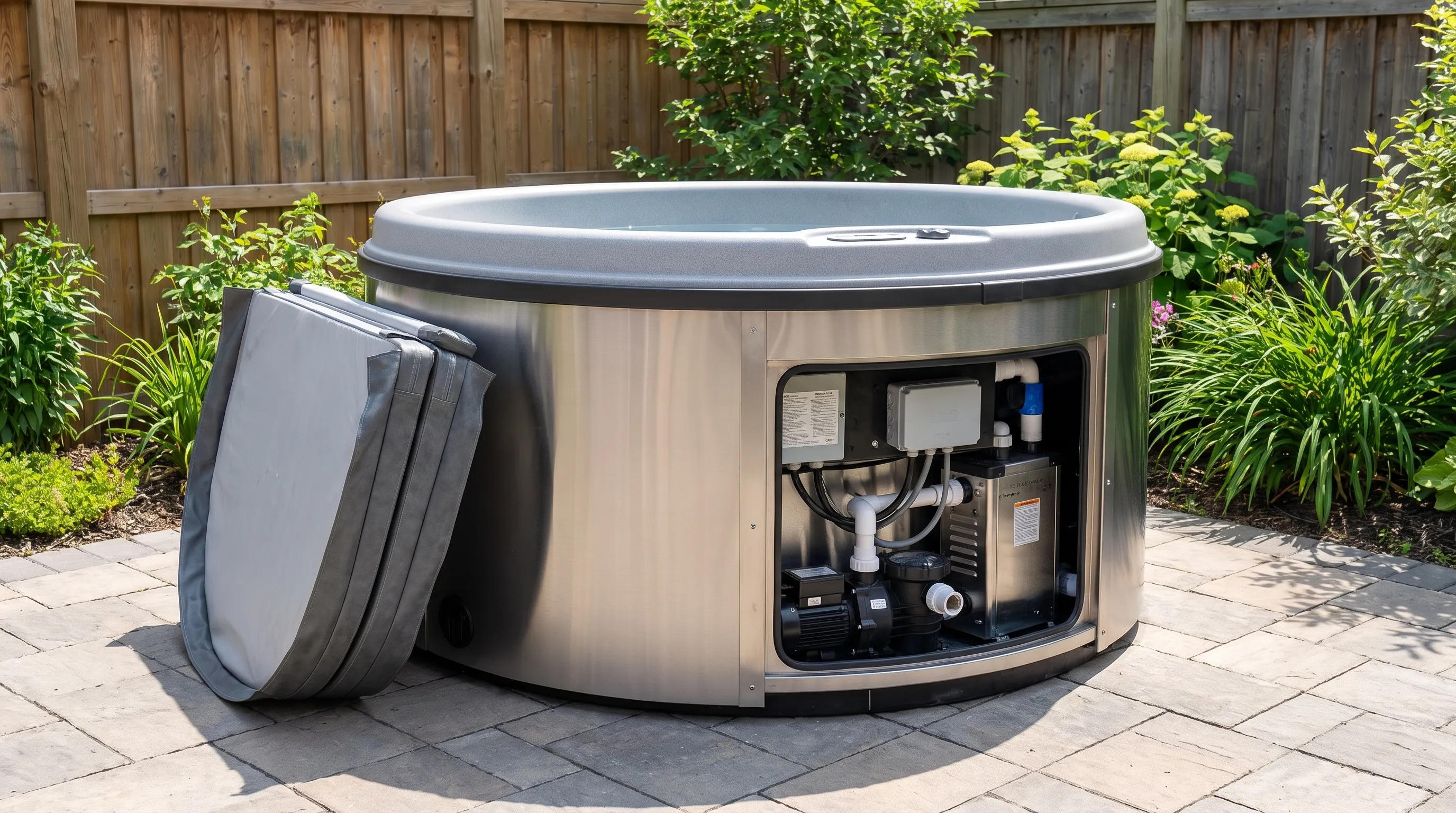
Also establish what comes with the tub. A fabricated soaking basin may require separate heating, filtration or circulation equipment. A complete spa package may include those systems, but you should verify each component rather than infer it from product photography.
Before comparing prices, make sure the quotes cover equivalent equipment. A shell-only price cannot be compared directly with a ready-to-install package that includes a heater, pump, controls and cover.
How to Evaluate a Stainless Steel Hot Tub Shell
Steel grade matters because heated, chemically treated water creates a demanding environment. Stainless steel resists corrosion through a protective surface layer, but it is not immune to damage from unsuitable water chemistry, contamination or poor fabrication.
Two grades you may encounter are 304 and 316. The following distinctions are useful starting points, not guarantees of suitability.
| Material specification | What it tells you | What to verify before buying |
|---|---|---|
| 304 stainless steel | A widely used stainless alloy | Whether the manufacturer approves it for the intended water chemistry and operating conditions |
| 316 stainless steel | Contains molybdenum, which improves resistance to certain forms of localized corrosion compared with 304 | Whether the entire water-contact assembly uses the specified grade |
| 316L stainless steel | A lower-carbon version of 316, commonly used in welded fabrication | Weld quality, post-fabrication treatment and approved maintenance procedures |
| Unspecified stainless steel | Too little information to assess suitability | Written confirmation of the alloy before purchase |
Do not treat “marine grade” as a complete specification. Ask for the actual alloy designation and the manufacturer's approved sanitizer system.
Inspect Welds, Finish and Repair Support
The quality of a stainless steel hot tub depends on its fabrication as well as its alloy. Welds, seams and fittings deserve as much attention as the broad, polished surfaces.
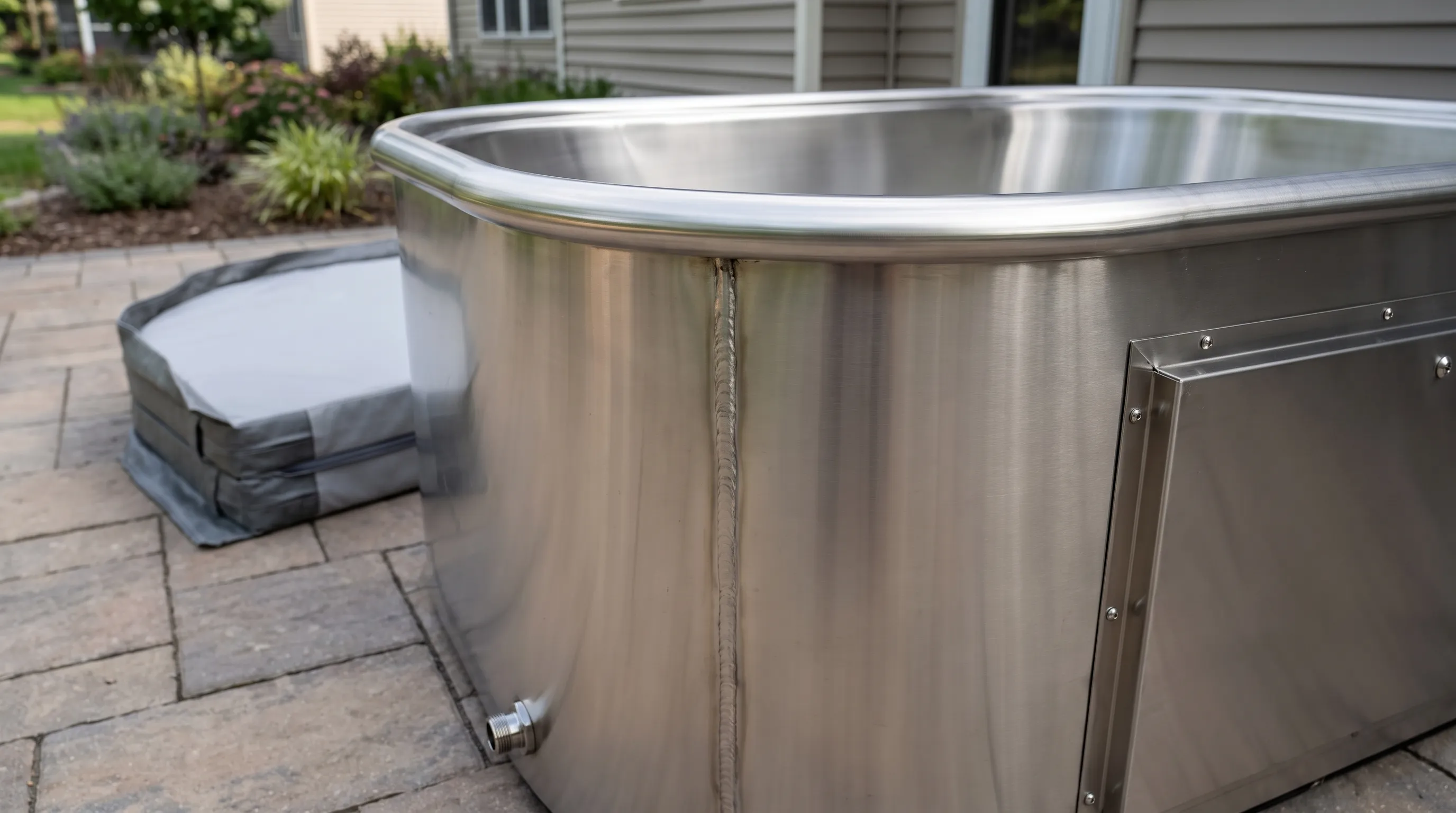
Ask how welded areas are cleaned and treated after fabrication. Proper removal of weld discoloration and appropriate surface treatment matter because poorly finished areas can be more vulnerable to corrosion. Smooth seams also make routine cleaning easier.
Request close-up photographs of interior corners, bench connections and plumbing penetrations. Look for accessible surfaces rather than narrow crevices that could trap debris.
Shell thickness needs context. A thicker sheet is not automatically a better tub; reinforcement, support geometry and fabrication quality also affect performance. Finally, ask who can repair a leak or damaged weld locally and whether the warranty addresses weld failures, corrosion and cosmetic staining separately.
Compare Seating and Soaking Comfort
A metal basin may offer an open layout, formed benches or a custom seating arrangement. An acrylic spa may have more contoured seats, although comfort ultimately depends on the individual model.
Check seat depth, back support, foot space and how easily you can enter and exit. If possible, sit in a display model. Published capacity describes how many people a manufacturer intends the tub to accommodate, not necessarily how comfortably your household will fit.
For a broader shortlist, you can also review the Cyanna Valley Spas 102 PNP Hot Tub. Compare its published shell material, seating, electrical requirements and included equipment with the metal-shell models you are considering rather than assuming the products share the same construction.
A stainless steel hot tub is not necessarily a jetted hydrotherapy spa. Confirm whether the design provides quiet soaking, air bubbles or water jets, then check where those features are positioned.
Hearthside Supply's comparison of acrylic hot tubs and other shell materials can help you decide whether steel's appearance and construction are worth prioritizing over a different seating design.
Evaluate Insulation, Heating and Operating Costs
Metal conducts heat readily, so a steel shell does not provide meaningful insulation by itself. The tub's insulation package, cover and exposed plumbing are more useful indicators of heat retention.
Ask where insulation is installed and whether the base, walls and plumbing are protected. Request details about the cover's fit and construction, including how it seals around the rim. A poorly fitting cover can undermine an otherwise well-insulated tub.
Heating systems also vary. Electric and wood-fired designs involve different installation requirements and daily routines. Some tubs are intended to stay warm between uses, while others may be filled and heated for individual sessions. Verify the intended operating pattern before deciding which is more economical for your household.
When evaluating a stainless steel hot tub, compare documented energy information under similar test conditions rather than accepting a broad “energy efficient” claim. Climate, water temperature, wind exposure and usage frequency all affect actual consumption.
If comparable performance data is unavailable, request heater power, pump specifications, insulation details and recommended seasonal operation. Those facts are more useful than an unsupported monthly-cost estimate.
Check Placement, Electrical Work and Delivery Access
The installation plan should be settled before you order. Use the manufacturer's filled weight and account for occupants when evaluating the supporting surface. A deck may require assessment by a qualified structural professional; an existing patio should not be assumed suitable without checking its condition and the tub's requirements.
Measure the delivery route as carefully as the final location. Gates, steps, tight corners, overhead obstructions and landscaping can change the unloading plan. Confirm whether the delivery service includes placement or only delivery to an accessible drop-off point.
Electrical requirements must come from the specific model's documentation. Have a licensed electrician review the supply, GFCI protection, bonding and applicable local requirements. Do not assume that a plug-in connection removes all installation considerations.
Leave room for service access, cover removal and safe entry. Plan a drainage route that follows local rules and keeps discharged water away from foundations and neighboring property.
For a more complete site-preparation checklist, review Hearthside Supply's guide to planning a hot tub installation before delivery day.
Compare the Total Installed Cost
The purchase price is only one part of the budget. A custom basin, a complete spa and a specialty soaking tub may include very different amounts of equipment and installation support.
Build a written comparison that separates included items from additional expenses.
| Cost category | What to confirm |
|---|---|
| Tub and equipment | Shell, heater, circulation pump, filtration, controls and any jets |
| Heat retention | Insulation, fitted cover and cover-handling equipment |
| Site preparation | Supporting base, structural work and drainage |
| Electrical work | Circuit requirements, wiring, protection and permits |
| Delivery and placement | Freight, unloading, difficult access and any crane work |
| Ongoing ownership | Energy, water-care supplies, filters and service availability |
A stainless steel hot tub with a lower advertised price can cost more to install if essential systems or placement services are excluded. Conversely, a more expensive package may simplify budgeting if its inclusions are clearly documented.
For a custom order, ask whether design changes affect the quote and whether the product is returnable. Confirm the return window, freight responsibilities and any exclusions before payment. Return policies for large installed equipment can differ from those for smaller household purchases.
Avoid paying a premium for a finish alone. Look for documented construction, usable comfort and support that justifies the total cost.
Match Water Care to the Manufacturer's Requirements
Stainless steel does not remove the need for sanitation, filtration or balanced water. It does make material compatibility an important part of choosing a maintenance routine.
Get written guidance on approved sanitizers, allowable water-chemistry ranges and how chemicals should be added. Concentrated chemicals should not be allowed to sit against the shell, and you should never mix treatment products. Follow the equipment manufacturer's instructions for circulation and dosing.
Do not assume a saltwater chlorine generator is compatible because the shell is stainless. Salt introduces chlorides, and suitability depends on the alloy, fabrication, operating conditions and the manufacturer's design approval.
The water-care instructions for a stainless steel hot tub should also identify approved cleaners. Avoid steel wool, abrasive tools or cleaners that the manufacturer prohibits. Carbon-steel contamination can leave rust marks even on stainless surfaces.
Hearthside Supply's guide to choosing a hot tub sanitizer explains the main treatment options, but the specific tub manufacturer's compatibility requirements should determine your final choice.
Before buying, ask whether your source water needs testing and what maintenance is recommended during periods of nonuse or freezing weather.
Request These Details Before You Order
Once you have narrowed the shortlist, ask each seller for the same information. That makes missing specifications and differences in package scope easier to spot.
- Shell construction: Water-contact alloy, thickness, reinforcement and weld-finishing details.
- Included systems: Heating, circulation, filtration, controls, jets and cover.
- Comfort measurements: Interior dimensions, seat depth, entry height and usable foot space.
- Installation requirements: Filled weight, electrical specifications, support requirements and service clearances.
- Water-care approval: Sanitizer compatibility, chemistry limits and permitted cleaning products.
- Ownership support: Warranty exclusions, replacement-part access, repair arrangements and return terms.
Choose a stainless steel hot tub only after those answers support your intended use. An attractive model with unclear water-care requirements or no practical repair pathway is a weaker purchase than one with complete documentation.
If two options meet your requirements, prioritize the design you will comfortably use and maintain. Extra jets, a custom finish or unusual dimensions add value only when they solve a real need.
Frequently Asked Questions
Is 316 stainless steel better than 304 for a hot tub? It generally offers better resistance to certain forms of localized corrosion because it contains molybdenum. However, grade alone does not establish suitability. Fabrication, water chemistry, temperature and the manufacturer's approval all matter.
Can a stainless steel hot tub rust? Yes. Stainless steel is corrosion-resistant, not corrosion-proof. Unsuitable chemistry, contaminated surfaces, poorly treated welds or incompatible cleaning products can contribute to staining or corrosion. Follow the manufacturer's care instructions and investigate persistent marks rather than assuming they are harmless.
Can I use a saltwater system with a steel shell? Only when the tub manufacturer explicitly approves that system and its operating conditions. Do not rely on a general claim that stainless steel tolerates saltwater.
Does a metal shell make the water heat faster? Shell material alone cannot establish heating speed. Heater output, water volume, starting temperature, insulation and heat loss determine how quickly the water reaches the desired temperature.
Is stainless steel always better than acrylic? No. Steel may suit shoppers who value a metal finish or a particular fabricated layout. Acrylic may better match a preference for contoured seating. Compare complete products rather than ranking them by shell material alone.
Choose the Complete System, Not Just the Finish
The right tub combines documented construction, comfortable seating, compatible water care and a realistic installation plan. Those details matter more than a polished surface or an unverified durability claim.
When browsing Hearthside Supply's home wellness selection, use your written checklist to compare products and ask for clarification wherever specifications are incomplete. Confirm the shell material, included equipment and installed cost before placing your order.
Ready to invest in your home wellness?
Explore our curated selection of premium saunas, hot tubs, cold plunges, steam showers, and swim spas — with clear specifications, nationwide delivery, and secure checkout.
Keep reading
View all posts
 Wellness
Steam Showers for Skin Health: The Ultimate Maintenance Guide
Discover how steam showers support skin health and learn the essential maintenance steps to keep your home spa functioning at peak performance.
Read article Wellness
Are Wood Burning Hot Tubs Right for Your Backyard?
A wood-fired soak offers a different experience from an always-ready electric spa. Learn how heating time, smoke, sanitation and winter care affect whether it fits your backyard and routine.
Read article
 Wellness
Cold Plunge Therapy: The 2026 Wellness Trend Explained
Discover why cold plunge therapy is the defining 2026 wellness trend. Learn the benefits, safety tips, and how to choose the right gear for your home recovery.
Read article