
Hot Tubs for Seniors With Easier Entry and Comfortable Seating
Hot Tubs for Seniors With Easier Entry and Comfortable Seating — Wellness
A comfortable spa starts with an entry route and seats that fit the person using it. Learn what to check before buying, from secure handrails and seat depth to cover handling and ongoing upkeep.
The best hot tubs for seniors make getting in, sitting comfortably and getting out feel manageable. Jet counts and extra features matter less if the entry requires an awkward step or the seats leave the user struggling to stand.
Start with the person who will use the spa most often: their balance, leg strength, height and preferred sitting position. Then evaluate the entire setup, including steps, handrails, the surrounding surface and cover handling. A comfortable purchase depends on all of these working together, not just the tub itself.
Start with access and seating, not jet counts
There is no single spa design that fits every older adult. Someone who walks independently may prioritize a supportive upright seat, while someone with limited balance may need an individualized access assessment before considering a conventional hot tub.
Use these priorities to narrow your shortlist:
| Priority | What to look for | What to verify before buying |
|---|---|---|
| Manageable entry | A practical route over the rim and down to the footwell | Rim height, internal steps and available handholds |
| Stable support | Purpose-designed steps and a compatible handrail | Mounting requirements, load ratings and placement |
| Comfortable seating | Supportive backrest and suitable seat depth | Actual seated water level and ease of standing |
| Reachable controls | Controls accessible from a stable position | Whether adjustments require leaning or twisting |
| Manageable upkeep | Accessible filters and practical cover handling | Who will perform each recurring task |
Treat entry and exit as purchase requirements, not accessories to figure out later. If the planned setup does not work for the user, a more powerful pump or additional jets will not solve the problem.
Plan easier entry when comparing hot tubs for seniors
Check the entire movement into and out of the spa
The cabinet height tells only part of the story. Measure the distance from the ground to the rim, then ask about the descent from the rim to the first internal step or seat. A lower shell is not automatically easier if it requires a deep bend or an awkward leg swing.
Exiting deserves equal attention. The user must rise from the seat, find secure footing and move over the rim while wet. Water buoyancy changes as they step out, so a movement that feels comfortable inside may be harder at the edge.
For significant mobility limitations, an occupational therapist or another qualified professional can help assess whether the proposed access method is appropriate. A standard portable spa may not be the right choice.
Choose steps and handrails as a coordinated setup
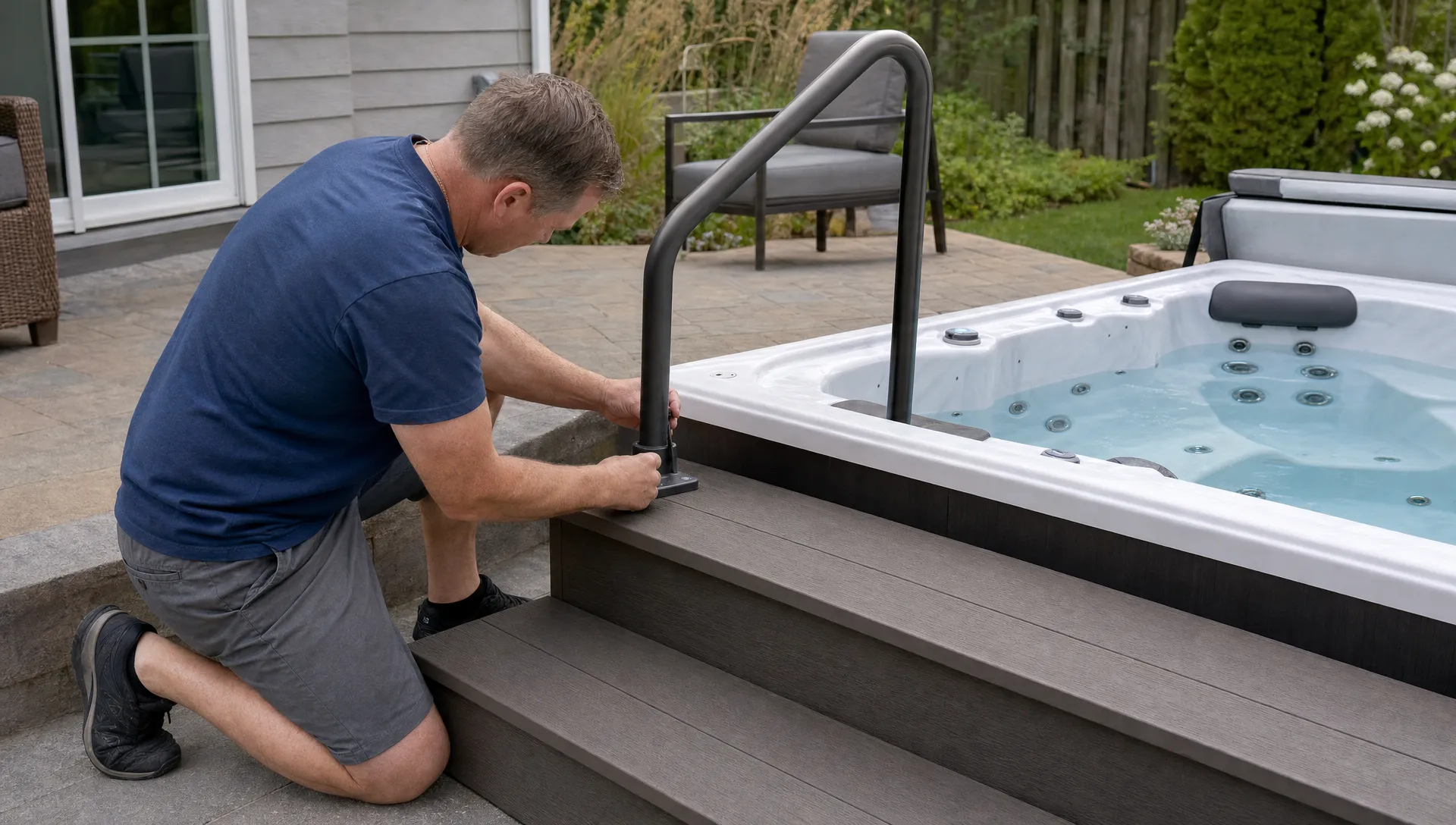
When comparing hot tubs for seniors, ask where the user can maintain a secure handhold during each part of entry and exit. A handrail that ends before the difficult movement begins offers limited help.
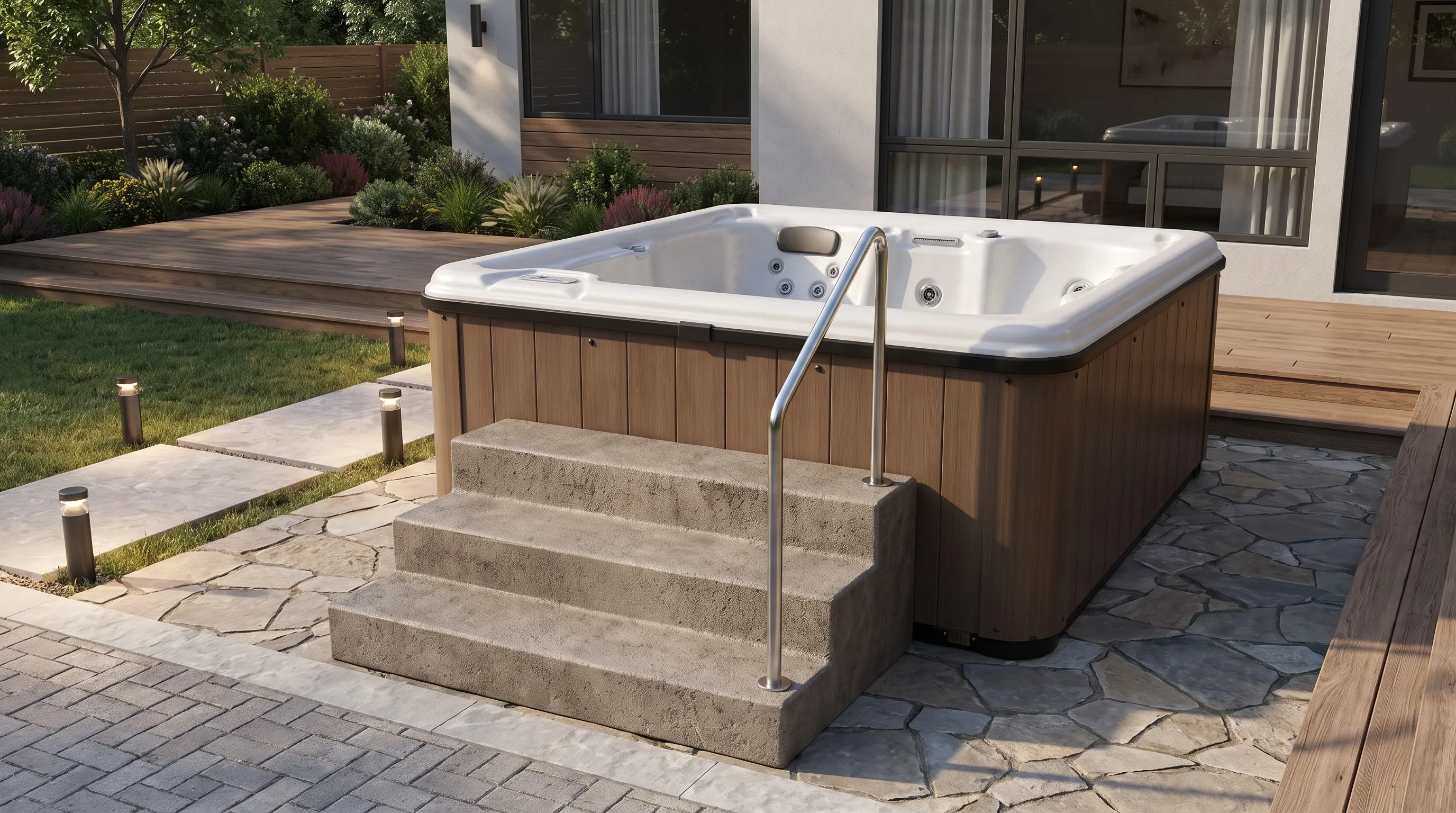
Look for broad, textured steps designed for spa use. Confirm their dimensions, rated capacity and compatibility with the installation. The handrail should have a suitable mounting system and be positioned for the intended transfer, following its manufacturer's instructions.
Do not use a cover lifter, loose patio chair or decorative surround as a substitute for a proper support rail. Hearthside Supply's guide to hot tub accessories can help you include entry equipment and cover handling in the purchase plan.
Make the route to the spa usable
The path from the house matters as much as the final step into the water. Plan for an even walking surface, drainage, lighting and enough space to approach without stepping around furniture or hoses.
In colder climates, consider how rain, leaves, frost or snow will affect that route. Keep towels and footwear within convenient reach without placing them where they become trip hazards.
A recessed installation or raised deck may change the entry height, but neither automatically creates accessible entry. Have a qualified contractor evaluate structural support, drainage, service access and applicable local requirements before committing to that design.
Choose seating that supports a comfortable position
Comfortable hot tubs for seniors should fit the actual user, not simply offer a large number of advertised seats. Seat depth, backrest shape and foot support can matter more than overall capacity.
Compare upright seats with loungers
An upright seat is a useful starting point because it allows a more conventional sitting posture. Check whether the user can keep their back supported and place their feet securely without sliding forward.
A lounge seat can feel comfortable for some people, but its reclined position may make repositioning or standing more difficult. Depending on body size and water depth, buoyancy may also make it harder to remain settled.
Neither design is universally better. If two people of different heights will share the spa, look for seating positions that accommodate both rather than assuming every molded seat will fit equally well. Adjustable jets are useful only when their location and intensity suit the person sitting in front of them.
Test fit wherever possible
A showroom sit test can help identify awkward contours, narrow footwells and controls that are difficult to reach. Only enter a display model with the retailer's permission and appropriate assistance. A dry test does not reproduce buoyancy or the conditions of a filled spa.
For hot tubs for seniors, a supervised wet test, when offered and appropriate, can provide a clearer picture of seated comfort and movement. Notice whether the water reaches an uncomfortable height or whether the user must brace themselves to stay in position.
If an in-person test is unavailable, request seat measurements, interior photographs and a clear explanation of the entry sequence. Ask specifically about the distance from the seat to the footwell and the route back out.
Apply the same checks to every model on your shortlist
Include the Cyanna Valley Spas Supreme PNP Hot Tub in your comparison if it interests you, then assess it against the same access and seating requirements as any other option.
Before ordering, confirm the model's current dimensions, seating layout, electrical requirements and compatibility with your proposed steps, handrail and cover lifter. Ask which accessories are included and which require a separate purchase. Do not assume that a product name establishes suitability for a particular mobility need.
Request answers in writing when a detail will determine whether the spa works for your household. A photograph showing the entry area and an interior seating diagram can be more useful than a general description of comfort.
Choose a model only after its documented layout and installation plan match the intended user's needs. If a key measurement or accessory connection remains unclear, resolve that question before checkout.
Keep temperature and use routines conservative
Age alone does not determine whether hot tub use is appropriate. Health conditions, medications, heat tolerance and the ability to exit safely all matter. An older adult with medical concerns should ask their healthcare professional whether soaking is suitable and what temperature and duration are appropriate.
The CDC's hot tub safety guidance states that water should not exceed 104°F. That is an upper limit, not a recommended setting for every user. Follow individualized medical advice and the spa manufacturer's instructions.
When evaluating hot tubs for seniors, consider whether the controls and temperature display are easy to read and operate. The user should not need to lean across the spa or stand on a wet step to make routine adjustments.
Avoid alcohol before and during use, keep drinking water nearby and arrange for another adult to be available if help could be needed. Stop soaking and get assistance if dizziness, weakness or feeling unwell develops.
Clean water is equally important. Follow the manufacturer's water-care instructions, test disinfectant and pH regularly and keep filters maintained. Warm water and jets do not replace proper sanitation, and the spa should not be used when water quality is uncertain.
Budget for the complete setup and ongoing work
The purchase price is only one part of the decision. Request a complete installation estimate that accounts for the base, electrical work, delivery access and any required permits. Deck installations may also need a structural assessment.
For hot tubs for seniors, access-related equipment should be part of the initial budget. Include suitable steps, a correctly installed handrail, lighting and a cover-lifting solution where appropriate. These should not be left to whatever remains after buying the spa.
Ask who will handle the cover in everyday use. Confirm the space needed for a lifter and whether the intended user can operate the proposed arrangement comfortably. A cover that is difficult to remove can turn a convenient routine into a task requiring help every time.
Ongoing ownership also involves electricity, water-care products, filter maintenance and occasional service. Actual costs depend on the model, climate, utility rates and usage, so avoid relying on a generic monthly estimate.
If bending, lifting or chemical handling is difficult, arrange help or price a local maintenance service before purchasing. Choosing a smaller spa does not remove those responsibilities.
Use a practical pre-purchase checklist
Before selecting hot tubs for seniors, have the seller and installer address the details that determine daily usability. Keep the answers with your quote so you can compare models on the same basis.
- Entry route: Confirm the rim height, internal steps, footwell access and handrail location.
- Seated fit: Check seat depth, back support, foot placement and the movement required to stand.
- Accessory compatibility: Verify step dimensions, rail mounting and cover-lifter clearance.
- Site readiness: Confirm base requirements, delivery access, drainage, electrical work and service clearance.
- Ownership plan: Identify who will manage water testing, filter care, cover handling and seasonal upkeep.
- Purchase terms: Review the model's written warranty, delivery details and applicable return conditions before ordering.
Have the intended user participate in the comparison rather than choosing solely from photographs or another person's preferences. Where possible, ask them to describe which movements feel difficult and which sitting positions feel supportive.
If safe entry or exit remains unresolved, pause the purchase. A different layout, an appropriately designed access solution or another type of bathing product may be a better fit.
Frequently asked questions
Are hot tubs good for people over 70? Some adults over 70 may enjoy soaking for relaxation, but age alone does not establish suitability. Medical conditions, medications, balance and heat tolerance matter. Ask a healthcare professional about personal limits and make sure entry and exit are manageable.
What are the best hot tubs for seniors? The best choice combines a workable entry route, suitable handrails, supportive seating and manageable upkeep. Prioritize fit and documented specifications over jet counts or labels suggesting that a model suits everyone in an age group.
Is a walk-in bathtub better than a hot tub? They serve different purposes. A walk-in bathtub is generally an indoor bathing fixture, while a hot tub is designed for soaking and typically retains treated water between uses. Compare the specific entry threshold, seating, bathing needs and assistance required rather than assuming either category is automatically more accessible.
What is the downside of owning a hot tub? Ownership requires water care, energy, cleaning and equipment maintenance. For someone with limited strength or mobility, removing the cover and entering or exiting may also require assistance. Include that workload in the decision, not just the purchase price.
Build a shortlist around comfortable daily use
Start with the entry method and seating fit, then compare the features you will actually use. Browse Hearthside Supply's outdoor hot tubs to identify options, and request the measurements and installation details needed to evaluate each one.
A suitable spa should work with the user's abilities, the available space and a realistic maintenance plan. Resolve those practical details before making the final purchase.
Ready to invest in your home wellness?
Explore our curated selection of premium saunas, hot tubs, cold plunges, steam showers, and swim spas — with clear specifications, nationwide delivery, and secure checkout.
Keep reading
View all posts Wellness
Sauna Room Layouts That Make the Most of Limited Space
A small footprint can still leave room for comfortable seating and easy movement. Compare five layout approaches and learn what to check before buying a sauna for a tight space.
Read article Wellness
How to Read Hot Tub Reviews Without Falling for Hype
A glowing rating cannot tell you whether a spa fits your home or budget. Learn how to separate useful owner feedback from sales hype and verify the claims that matter before you buy.
Read article Wellness
Is a Dual-Zone Hot Tub Swim Spa Combo Worth the Extra Cost?
Separate temperatures can make swimming and soaking easier, but they also add cost and maintenance. Compare the upgrade with a single-zone spa or separate units before deciding which setup fits your household.
Read article