
Is a Portable Cold Plunge Practical for Frequent Travel?
Is a Portable Cold Plunge Practical for Frequent Travel? — Wellness
A tub that fits in your trunk may still be awkward to fill, chill and drain at your destination. See when a portable plunge makes sense for travel and which buying checks prevent expensive surprises.
A cold plunge portable enough to fit in your trunk can be practical for frequent travel, but packing the tub is only part of the job. You also need a suitable place to fill it, a way to cool the water and permission to drain it before leaving. For road trips with longer stays, those requirements may be manageable. For frequent flights or overnight hotel stops, they often outweigh the convenience.
The short answer: A portable plunge works best when you travel by car, stay several nights and have an approved ground-level setup. It is usually less practical when destinations change daily.
When does a portable plunge make sense for travel?
Your itinerary matters more than the word “portable” on a product page. A lightweight tub can still create considerable work at each destination.
| Travel situation | Practicality | Main consideration |
|---|---|---|
| Road trip with several nights at one property | Often workable | Confirm water access, drainage and permission before arrival |
| Repeated visits to the same vacation home | Strong fit if the location is suitable | Leaving equipment there may eliminate packing altogether |
| RV or campground travel | Depends on the site | Water availability, wastewater rules and storage space vary |
| Frequent hotel stays | Often inconvenient | Suitable space and approved filling and drainage may be unavailable |
| Frequent flights | Usually difficult | Packed dimensions, baggage weight and accessories add complexity |
| One-night stops | Usually poor value | Setup, cooling and drying can take more effort than the session itself |
A cold plunge portable enough for road trips is not automatically practical for air travel. Before buying, identify the destinations where you would actually use it, rather than choosing around an occasional ideal trip.
What makes a cold plunge portable enough to travel with?
Packed size matters more than empty tub weight
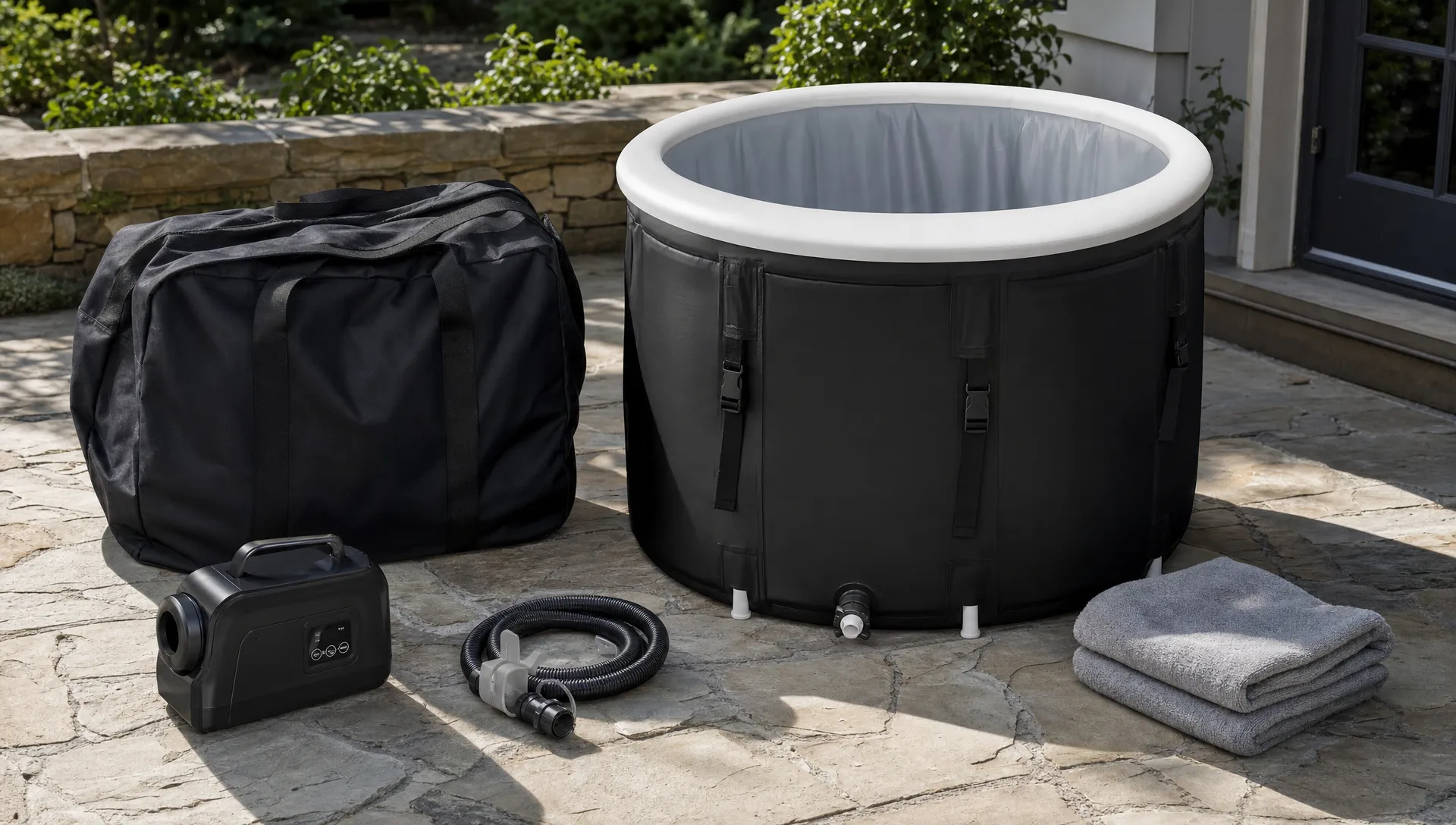
Compare the packed dimensions and total kit weight, not just the empty tub's specifications. Depending on the model, your kit may include a pump, cover, hoses, fittings, cleaning supplies and a protective bag. A chiller adds another component to transport.
Check whether the tub folds or deflates, whether tools are required and whether the carrying bag is included. Do not assume that “portable” means suitcase-sized or airline-compatible.
Making a cold plunge portable starts with accounting for everything you need to use it, not just the vessel. Measure your available trunk or storage space with your ordinary luggage already accounted for.
For flights, compare the complete kit against your airline's current baggage rules. If accessories include batteries, check the applicable restrictions separately.
Water changes the weight calculation
A tub that is easy to carry empty becomes a substantial load when filled. One U.S. gallon of water weighs approximately 8.34 pounds. As an illustration, 60 gallons weighs about 500 pounds before adding the tub, accessories or occupant.
That example is not a recommended fill volume. Use the manufacturer's stated working capacity and fill instructions for the model you are considering.
Plan to move the tub only when empty, unless its manufacturer explicitly permits otherwise. Do not treat a hotel balcony, rooftop or elevated deck as a suitable location without approval and confirmation that it can support the full load. Where structural capacity is uncertain, seek qualified advice rather than estimating.
The destination needs to support the setup
A cold plunge portable enough to carry easily can still be unusable at a property without suitable water access or drainage. Ask the host or property manager about the actual setup, not simply whether wellness equipment is allowed.
Confirm a level surface compatible with the tub's instructions, a practical filling route and an approved place to discharge water. Protect surrounding surfaces from spills and keep entrances and walking routes clear.
For a chiller-equipped setup, verify the electrical requirements and required ventilation space. Outdoor permission does not automatically mean that an outlet is suitable for equipment used around water.
Campgrounds and RV parks may have specific wastewater rules. A water hookup alone does not establish permission to fill and empty a plunge tub at the site.
Ice or a chiller: which is better for frequent trips?
An ice-cooled setup generally involves less equipment to transport, provided the tub is designed for that use. However, cooling becomes a recurring destination task. You need to locate ice, transport it and measure the water temperature rather than guessing by feel.
The amount of ice needed depends on water volume, starting temperature, surrounding conditions and your intended water temperature. A fixed “bags per session” estimate is not reliable across different trips.
A compatible chiller can reduce dependence on purchased ice, but it changes the packing and installation requirements.
| Consideration | Ice-cooled setup | Chiller-equipped setup |
|---|---|---|
| Transport | Fewer components to carry | Additional equipment, hoses and connections |
| Cooling logistics | Obtain ice at each destination | Arrange suitable power and ventilation |
| Temperature control | Measure and adjust manually | Depends on the chiller's capabilities and conditions |
| Travel preparation | Plan ice storage and availability | Follow transport and restart instructions |
| Most suitable itinerary | Occasional use or simpler road trips | Longer stays with an approved setup |
Keeping a cold plunge portable is easier with fewer components, but repeated ice purchases can make a simpler kit less convenient over time. Choose around your normal trip length and destination access, not only the purchase price.
If considering a chiller, confirm tub compatibility, connection requirements and any manufacturer instructions about transport orientation or waiting before restarting it. Do not assume those instructions are identical across models.
Build a repeatable fill, drain and packing routine
Frequent travel exposes weaknesses in the routine quickly. A setup that works once on a spacious patio may be frustrating when you are trying to check out on time.
Before departure, check that you have the components your specific system requires:
- The tub and its supplied or approved support components.
- An appropriate pump if the design requires inflation.
- Filling and drainage equipment compatible with the destination.
- A water thermometer and manufacturer-approved cleaning supplies.
- A cover, towels and suitable transport protection.
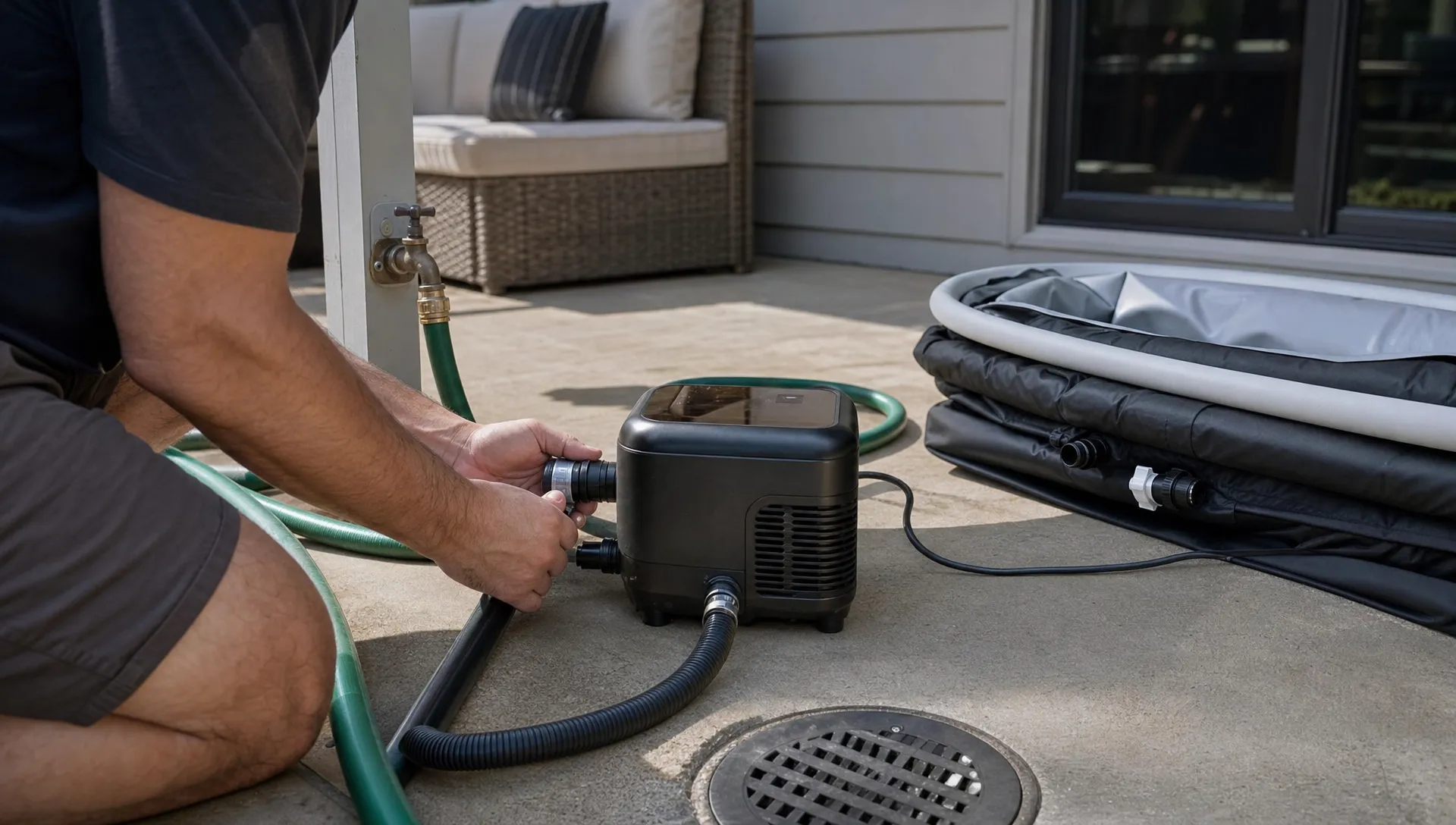
At arrival, inspect the tub, prepare the approved location and check fittings before filling. Make sure the drain route is ready first, rather than discovering an unsuitable outlet when you need to leave.
To keep a cold plunge portable between stops, plan how you will empty, clean and fully dry it. Depending on its materials and construction, trapped moisture can encourage odors or microbial growth during storage.
Follow the manufacturer's water-care instructions. Do not assume that water is safe to reuse simply because it is cold, or that a filter replaces sanitation. Hearthside Supply's guide to cold plunge maintenance provides additional context for managing clean water and equipment.
Allow time for drainage and drying before checkout. Discharge water only where the property and local rules permit, particularly if it contains treatment chemicals.
Compare the total travel cost, not just the tub price
The purchase price is only one part of the decision. A travel setup may also involve baggage charges, ice purchases, water charges, electricity and replacement consumables. Which expenses apply depends on the equipment and destination.
A useful comparison is:
Cost per completed session = trip-specific plunge expenses ÷ sessions actually taken.
Calculate that separately from the equipment purchase price. Then consider how many trips you realistically expect to use the system on. A low-cost tub does not necessarily represent good value if logistical problems leave it unused.
Choosing a cold plunge portable enough for repeat trips means evaluating the recurring workload as well as the equipment cost. Filling, obtaining ice, cleaning and drying all consume time, even when there is no separate charge.
Compare that effort with verified access to suitable facilities at your destination. Check availability, booking requirements and charges before relying on a hotel amenity or nearby facility. Access may be less predictable than bringing your own equipment, but it avoids transporting a complete wet setup.
Safety still matters away from home
An unfamiliar location adds hazards such as slippery surfaces, awkward entry and exit, unsuitable electrical connections and limited privacy. Check these before focusing on water temperature.
Cold-water immersion can cause a rapid breathing response and place stress on the cardiovascular system. The American Heart Association's discussion of cold-water immersion risks explains why colder is not automatically better. If you have a medical condition or are unsure whether immersion is appropriate, consult a clinician first.
Avoid using the tub alone, keep your head above water and do not use it after drinking alcohol. Exit promptly if you feel unwell, dizzy or unable to control your breathing.
For powered equipment, follow the manufacturer's electrical requirements, including GFCI protection where specified or required. Never improvise adapters or extension arrangements around water. Keep children from accessing the filled tub unattended.
For temperature-selection context, see Hearthside Supply's cold plunge temperature guide, rather than choosing a target solely because a system can reach it.
When keeping your wellness setup at home is more practical
If making a cold plunge portable adds more work than your travel schedule allows, a dedicated home setup may be the better purchase. You can plan water access, drainage and equipment placement once, instead of repeating those checks at every destination.
Travel then becomes a separate decision: use suitable local facilities when available or skip immersion when the logistics are poor. That can be more realistic than carrying equipment you rarely have time to use.
If your broader goal is a permanent home wellness space, distinguish between products intended for different experiences. A bathroom-focused purchase such as the Luxury Bath Supply Platinum 3 Person Walk-In Steam Shower DZ934 belongs in a fixed-installation plan, not a travel kit. Review its listed dimensions and installation requirements before considering it for your space.
A steam shower is not a substitute for cold-water immersion. The relevant buying question is whether you want equipment that travels or a wellness setup designed around your home.
Frequently asked questions
Can you take a portable cold plunge on a plane? Possibly, depending on its packed dimensions, weight and components. A cold plunge portable enough for checked luggage still needs a workable filling, cooling and drainage plan at the destination. Check airline rules and manufacturer transport instructions before booking baggage.
Is an inflatable tub the best choice for travel? It may offer useful packing flexibility, but compare the complete kit, setup requirements, material-care instructions and occupant fit. Inflatable construction alone does not establish durability or suitability for frequent packing.
Do you need a chiller for a travel plunge? Not necessarily. A tub approved for ice-cooled use can avoid transporting a chiller, but you will need reliable ice access and a thermometer. A compatible chiller may be more convenient during longer stays with suitable power and space.
Can you use a portable plunge in a hotel room? Do not assume so. You need explicit property permission, an appropriate load-bearing location, spill protection and approved filling and drainage. Without those conditions, use an established facility rather than improvising.
Choose for your usual itinerary
A portable plunge is most practical for car travel, multi-night stays and destinations you can approve in advance. For frequent flights or short stops, a home setup or destination facility is often the more workable option.
When comparing cold plunge tubs at Hearthside Supply, review packed size where provided, empty weight, working capacity, cooling method and setup requirements. If essential travel specifications are missing, confirm them before purchasing.
Ready to invest in your home wellness?
Explore our curated selection of premium saunas, hot tubs, cold plunges, steam showers, and swim spas — with clear specifications, nationwide delivery, and secure checkout.
Keep reading
View all posts Wellness
Sauna Room Layouts That Make the Most of Limited Space
A small footprint can still leave room for comfortable seating and easy movement. Compare five layout approaches and learn what to check before buying a sauna for a tight space.
Read article Wellness
Hot Tubs for Seniors With Easier Entry and Comfortable Seating
A comfortable spa starts with an entry route and seats that fit the person using it. Learn what to check before buying, from secure handrails and seat depth to cover handling and ongoing upkeep.
Read article Wellness
How to Read Hot Tub Reviews Without Falling for Hype
A glowing rating cannot tell you whether a spa fits your home or budget. Learn how to separate useful owner feedback from sales hype and verify the claims that matter before you buy.
Read article