
How to Compare Cold Water Plunge Tub Filtration Systems
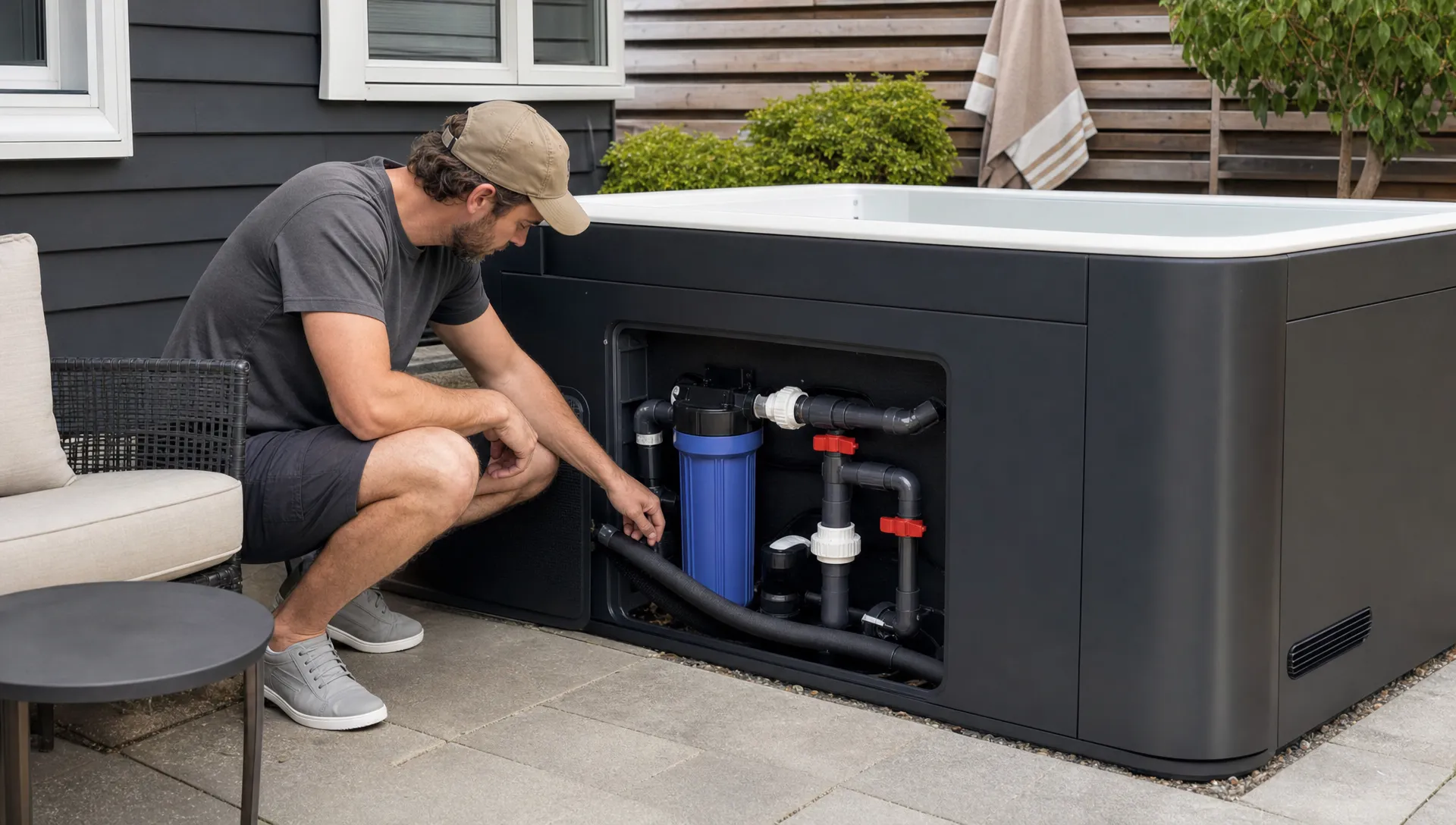
How to Compare Cold Water Plunge Tub Filtration Systems — Wellness
A finer filter is not always a better filter. Learn how to compare flow, disinfection, cartridge costs and maintenance so you can choose a system that fits your household and avoid costly compatibility mistakes.
A cold water plunge tub can have a powerful chiller and still leave you with a frustrating water-care routine. The difference often comes down to filtration: what the system captures, how effectively water moves through it and how easily you can keep it working.
The best comparison goes beyond counting filters or choosing the smallest micron number. You also need to understand disinfection, replacement costs and whether the equipment is designed to work together.
For a home buyer, the goal is straightforward: choose a system that handles your household’s use without creating excessive maintenance or restricting circulation. Before purchasing, ask for the filter specifications, water-care instructions and replacement-part information. A clear manual usually tells you more than a long list of treatment features.
What a cold water plunge tub filtration system actually does
Water care involves several separate jobs. A filter handles only some of them.
| Function | What it does | What it does not establish on its own |
|---|---|---|
| Mechanical filtration | Captures particles such as hair, lint and other debris | That the water is disinfected |
| Circulation | Moves water through the filter, chiller and treatment equipment | That every part of the tub receives equal treatment |
| Disinfection | Uses an appropriate treatment process to control microorganisms | That dirt and accumulated contaminants have been removed |
| Water replacement and cleaning | Removes accumulated contamination and allows surfaces to be cleaned | That ongoing treatment is unnecessary after refilling |
Clear water is not proof of sanitary water. A cartridge can remove visible debris while microorganisms remain in the water or on surfaces. Cold temperatures do not make the water sterile.
When a listing says “three-stage filtration,” identify each stage. A screen, cartridge and UV unit perform different functions. That combination is not automatically better than a simpler system with documented performance and clear maintenance instructions.
Compare micron ratings, not just filter counts
A micron rating describes the particle size associated with a filter’s performance. Smaller numbers generally indicate finer particle capture, but they do not tell the whole story.
When comparing a cold water plunge tub, ask whether its filter rating is nominal or absolute, and request the stated removal efficiency and test method.
A nominal rating describes performance under the manufacturer’s stated conditions, but the captured percentage can vary between products. An absolute rating should also come with supporting performance information. Treating either label as a universal guarantee makes comparisons unreliable.
Why finer filtration is not always better
A finer cartridge can create more resistance to water flow. As debris accumulates, that resistance can increase further, potentially reducing circulation through the treatment loop.
Filter surface area matters too. Two cartridges with the same micron rating may have different dirt-holding capacities and cleaning demands because their dimensions, media and construction differ.
Compare the approved cartridge as part of the complete system. Do not substitute a finer filter unless the manufacturer confirms compatibility. The right choice balances particle capture, flow and a maintenance schedule you can realistically follow.
Check actual flow through the complete system
A pump’s advertised maximum flow is not necessarily the flow delivered through an installed cold water plunge tub. Filters, hoses, fittings, elevation changes and the chiller all add resistance.
Ask for the expected operating flow with the specified equipment connected. Then confirm that this flow falls within the required range for the chiller and any UV or other treatment equipment.
Use turnover time as a comparison, not a safety guarantee
Theoretical turnover time is calculated as:
Water volume in gallons ÷ operating flow in gallons per minute = turnover time in minutes.
For example, a hypothetical 100-gallon tub operating at 5 gallons per minute has a theoretical turnover time of 20 minutes. This is an illustration, not a recommended operating target.
Turnover does not mean every drop has passed through the filter once. Mixing patterns, inlet placement and areas with weak circulation affect how water moves. Turnover also says nothing by itself about disinfection effectiveness.
When comparing cold plunge chillers, check whether a circulation pump and filter are included, required separately or restricted to approved combinations. Cooling capacity alone does not establish filtration performance.
Evaluate disinfection separately from particle removal
A cold water plunge tub may combine mechanical filtration with UV, ozone or a manufacturer-specified chemical treatment program. These approaches have different operating requirements and should not be treated as interchangeable.
The CDC’s healthy swimming guidance provides useful background on recreational water hygiene. For your equipment, follow the model’s specific water-care instructions rather than assuming that general pool or hot tub targets apply unchanged.
UV: look beyond lamp wattage
UV treatment acts on water passing through its treatment chamber. Performance depends on factors including flow, water clarity, lamp condition and the system’s design.
A lamp’s electrical wattage alone does not establish the treatment dose delivered to the water. Ask for documented performance at the system’s operating flow, along with lamp replacement and sleeve-cleaning requirements.
UV does not leave an ongoing disinfectant residual in the tub. It therefore should not be presented as proof that all water and wetted surfaces remain disinfected between passes through the unit.
Ozone: assess the complete installation
For any cold water plunge tub advertised with ozone, ask how ozone is introduced, how contact is managed and how excess gas is controlled. The presence of an ozone generator alone is not enough to evaluate performance or safety.
Ozone can be hazardous to breathe. Choose manufacturer-engineered equipment and follow its operating and ventilation requirements. Do not add an aftermarket generator simply because its output sounds powerful.
Chemical treatment: confirm the written protocol
Ask whether the manufacturer requires an approved sanitizer, what testing is needed and which products are compatible with the tub and equipment.
Do not assume that UV or ozone means “no chemicals needed.” Conversely, do not add a pool or spa product without confirming that its label and the equipment instructions permit the intended use. Marketing shorthand is not a substitute for a written water-care protocol.
Compare maintenance access and replacement parts
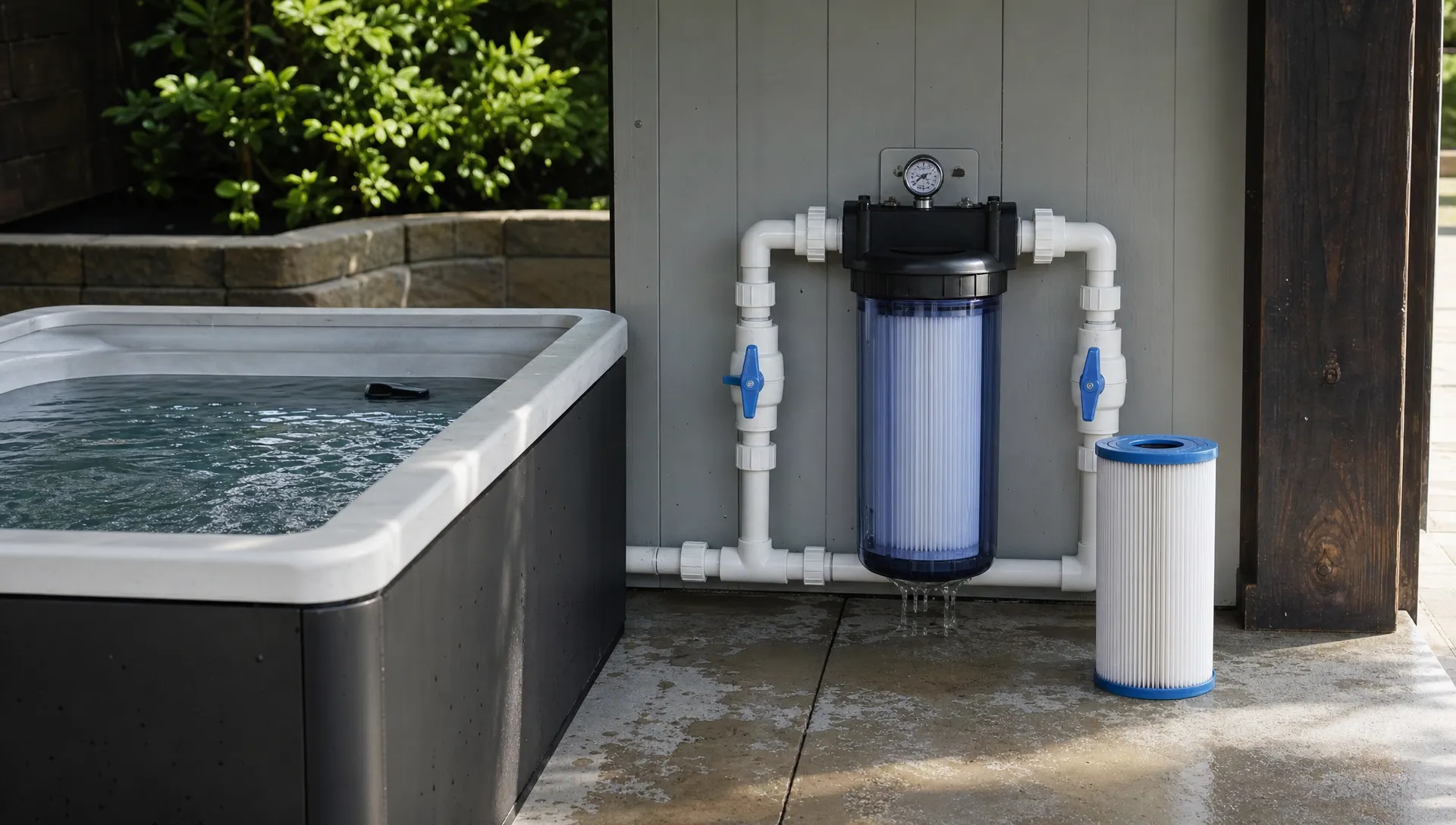
A filtration system that is awkward to service is harder to keep in good condition. Before buying, find out where the cartridge sits and what happens when you open its housing.
Useful details include whether isolation valves limit water loss, whether tools are required and how much clearance you need to remove the cartridge. This matters when equipment will sit against a wall, beneath a cover or inside a tight enclosure.
For a cold water plunge tub with a reusable filter, “reusable” does not mean maintenance-free or permanent. Ask how it must be cleaned, whether any separate disinfection step is required and what signs call for replacement.
A washable screen and a pleated cartridge may need very different care. Avoid assuming that rinsing removes every type of contamination or restores all filters to their original performance.
Also request the exact replacement part number. Confirm availability, expected replacement guidance and whether using an alternative cartridge affects compatibility or warranty coverage. Our guide to keeping cold plunge water clean and cold covers the broader maintenance routine beyond choosing equipment.
Calculate ownership costs, not just purchase price
Two similarly priced systems can have different ongoing costs. Compare them using the same assumptions about household use and the manufacturer’s required maintenance schedule.
A practical annual estimate includes replacement cartridges, approved treatment products, test supplies and any UV lamps or other scheduled replacement components. Add electricity and service costs where reliable figures are available.
For disposable cartridges, use this calculation:
Cartridge price × expected replacements per year = estimated annual cartridge cost.
If replacement frequency depends on use, ask for the conditions behind the seller’s estimate. A schedule based on one person showering before each session may not reflect several household members using the tub daily.
The operating cost of a cold water plunge tub also depends on circulation requirements. Ask how long the pump must run, whether filtration is independent of cooling and what electrical consumption information is available. Chiller horsepower alone is not enough to calculate the system’s energy use.
Match the system to your household
The strongest filtration package on paper is not necessarily the most practical purchase. Your routine, setting and willingness to maintain the equipment should shape the decision.
| Your situation | Prioritize | Confirm before buying |
|---|---|---|
| One user with occasional sessions | Straightforward water care and accessible parts | Required circulation schedule and water-replacement guidance |
| Several household users | Documented treatment capacity and easy servicing | Whether the manufacturer’s guidance covers your expected usage |
| Outdoor installation | Debris control, a suitable cover and protected equipment | Environmental limits, drainage and service access |
| Limited installation space | Accessible housings and a compact equipment layout | Clearance for cartridge removal and equipment servicing |
| Preference for minimal hands-on upkeep | Clear maintenance requirements and readily available supplies | Which tasks remain manual and how often they are required |
Showering before entry and keeping the tub covered between sessions can reduce the contamination entering the water. Those habits support the system; they do not replace filtration, disinfection or scheduled cleaning.
Ask for evidence before paying for extra features
Before committing to a cold water plunge tub, request documentation that connects its advertised features to actual operating conditions.
- Filter performance: Micron rating, removal efficiency, test method and approved cartridge part number.
- System flow: Expected flow through the installed equipment, not just the pump’s unrestricted maximum.
- Treatment requirements: Written instructions for disinfection, testing, circulation and water replacement.
- Maintenance costs: Current consumable prices and the assumptions behind replacement intervals.
- Service support: Access requirements, replacement-part availability and applicable warranty terms.
If a seller cites NSF/ANSI/CAN 50 certification, verify the exact model and listed scope in NSF’s pool and spa equipment directory. Certification of one component does not automatically cover the entire tub or establish suitability for commercial use.
Missing documentation does not prove a system performs poorly, but it makes a confident comparison harder. Give more weight to clear specifications than to claims such as “medical-grade,” “maintenance-free” or “crystal-clear water.”
Frequently asked questions
Is a smaller micron rating always better? No. Finer filtration can capture smaller particles, but it may also increase flow resistance and maintenance demands. Compare the approved cartridge’s efficiency, surface area and compatibility with the complete system.
Does filtration eliminate the need to change the water? No. Filtration does not remove every contaminant or clean all wetted surfaces. Follow the manufacturer’s water-replacement and cleaning instructions, adjusting within that guidance for usage and water condition.
Can UV or ozone replace all other water treatment? Do not assume so. Whether additional treatment is required depends on the system’s documented design and operating instructions. Request the complete water-care protocol before purchasing.
How often should a cartridge be cleaned or replaced? Follow the manufacturer’s schedule and condition-based instructions. Usage, incoming debris and changes in flow or pressure can affect service needs. A universal replacement interval is not reliable across different systems.
Choose the clearest specifications, not the longest feature list
The best cold water plunge tub filtration system for your home balances particle removal, compatible circulation, documented disinfection and manageable upkeep. No single micron rating or treatment feature answers all four questions.
Browse Hearthside Supply’s cold plunge tubs, then compare the manuals and equipment requirements of your shortlisted models. Resolve any missing filtration details before checkout so you know both what you are buying and what it will take to maintain.
Ready to invest in your home wellness?
Explore our curated selection of premium saunas, hot tubs, cold plunges, steam showers, and swim spas — with clear specifications, nationwide delivery, and secure checkout.
Keep reading
View all posts Wellness
Sauna Room Layouts That Make the Most of Limited Space
A small footprint can still leave room for comfortable seating and easy movement. Compare five layout approaches and learn what to check before buying a sauna for a tight space.
Read article Wellness
Hot Tubs for Seniors With Easier Entry and Comfortable Seating
A comfortable spa starts with an entry route and seats that fit the person using it. Learn what to check before buying, from secure handrails and seat depth to cover handling and ongoing upkeep.
Read article Wellness
How to Read Hot Tub Reviews Without Falling for Hype
A glowing rating cannot tell you whether a spa fits your home or budget. Learn how to separate useful owner feedback from sales hype and verify the claims that matter before you buy.
Read article