
Swim Spa FAQs: Cost, Installation & Year-Round Use
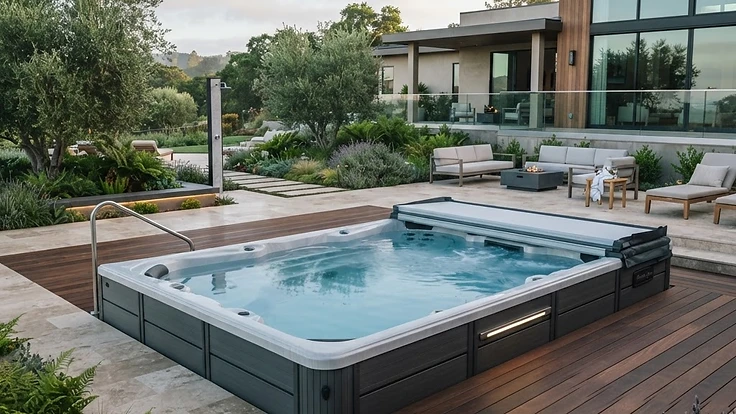
Swim Spa FAQs: Cost, Installation & Year-Round Use — Swim Spas
Get clear answers to common swim spa questions, including cost, installation, swim currents, maintenance, energy use, safety, and year-round operation.
Shopping for a swim spa raises practical questions about price, site preparation, swim current performance, maintenance, and winter operation. This comprehensive swim spa FAQ answers the questions buyers ask most often so you can compare models confidently and choose a system that fits your property, wellness goals, and budget.
Unlike a traditional pool, a swim spa combines a compact footprint with adjustable water resistance, hydrotherapy seating, and year-round usability. Before you purchase, review the fundamentals in our Swim Spa Buying Guide, then use the questions below to evaluate specific configurations.
Getting Started Questions
What is a swim spa?
A swim spa is a heated, self-contained vessel designed for stationary swimming, aquatic exercise, relaxation, or all three. A propulsion system creates a continuous swim current, allowing you to swim in place without the length of a conventional pool. Many models also include a hot tub section, therapy section, massage jets, contoured seating, and independent water controls.
Swim spas are available in several configurations, including single-zone units and dual-zone swim spas. A dual-zone model separates the swimming area from a warmer hot tub section, letting one person train in cooler water while another enjoys hydrotherapy. For a deeper overview, read What Is a Swim Spa: Everything You Need to Know.
How long does a swim spa need to be?
Hull length depends on how you plan to use the spa. Compact models may work well for recreational movement, water walking, and basic exercise, while longer models provide more room for stroke technique, freestyle, backstroke, and triathlon training. As a general planning principle, measure not only the swim spa itself but also the service access, cover clearance, steps, and walking space around it.
Ask whether the listed dimensions include the cover, cabinet, stairs, and equipment access. A swim spa that fits the patio on paper may still be impractical if the cover cannot open fully or technicians cannot reach the pumps and filtration equipment.
What is the difference between a swim spa current and a jet system?
A dedicated swim current uses a propulsion system or counter-current design to move a broad, consistent column of water toward the swimmer. A conventional jet system generally produces narrower streams intended for massage or localized water resistance. Some swim spas use swim jets, while more advanced models use a wide adjustable current that feels smoother across the shoulders and torso.
When comparing systems, ask how the current speed is adjusted, whether it can be fine-tuned while swimming, and whether the flow remains stable at different settings. A tether system can also help beginners, rehabilitation users, and athletes maintain position while learning the current.
Cost and Budget Questions
How much does a swim spa cost?
The purchase price varies according to hull length, construction, propulsion technology, jet count, insulation, automation, and whether the model is single-zone or dual-zone. A basic exercise-focused unit typically costs less than a premium swim spa combo with independent temperature zones, advanced water care, powerful therapy jets, and upgraded cabinetry.
Your complete swim spa cost should include more than the shell. Budget for a concrete pad or engineered foundation, electrical work, delivery, possible crane placement, steps, cover lifter, water-care supplies, and ongoing electricity. Request a written quote that separates the unit, accessories, installation requirements, taxes, and delivery services.
What affects the monthly cost to run a swim spa?
Energy use depends on water volume, set temperature, climate, frequency of use, cover quality, insulation, wind exposure, and heater efficiency. A well-insulated cabinet, full-foam or equivalent insulation strategy, and a properly fitted thermal cover help reduce heat loss. Frequent cover removal, poor heat retention, and operating at high temperatures during cold weather increase consumption.
For a realistic planning framework, read How Much Does a Swim Spa Cost to Run Per Month?. The most efficient model is not necessarily the one with the lowest purchase price; it is the one that balances insulation, heater capacity, filtration, cover performance, and the way your household actually uses it.
Is a swim spa cheaper than installing a pool?
Often, a swim spa requires less excavation, uses a smaller footprint, and can be installed faster than a traditional in-ground pool. However, the answer depends on access, foundation work, electrical upgrades, landscaping, and whether a crane is needed. A pool may offer more room for large groups, while a swim spa typically provides more convenient heating, therapy, and year-round use in a compact space.
Compare both options by intended use rather than upfront price alone. Our guide to swim spas versus pools can help clarify the tradeoffs.
Installation and Site Preparation Questions
What kind of foundation does a swim spa need?
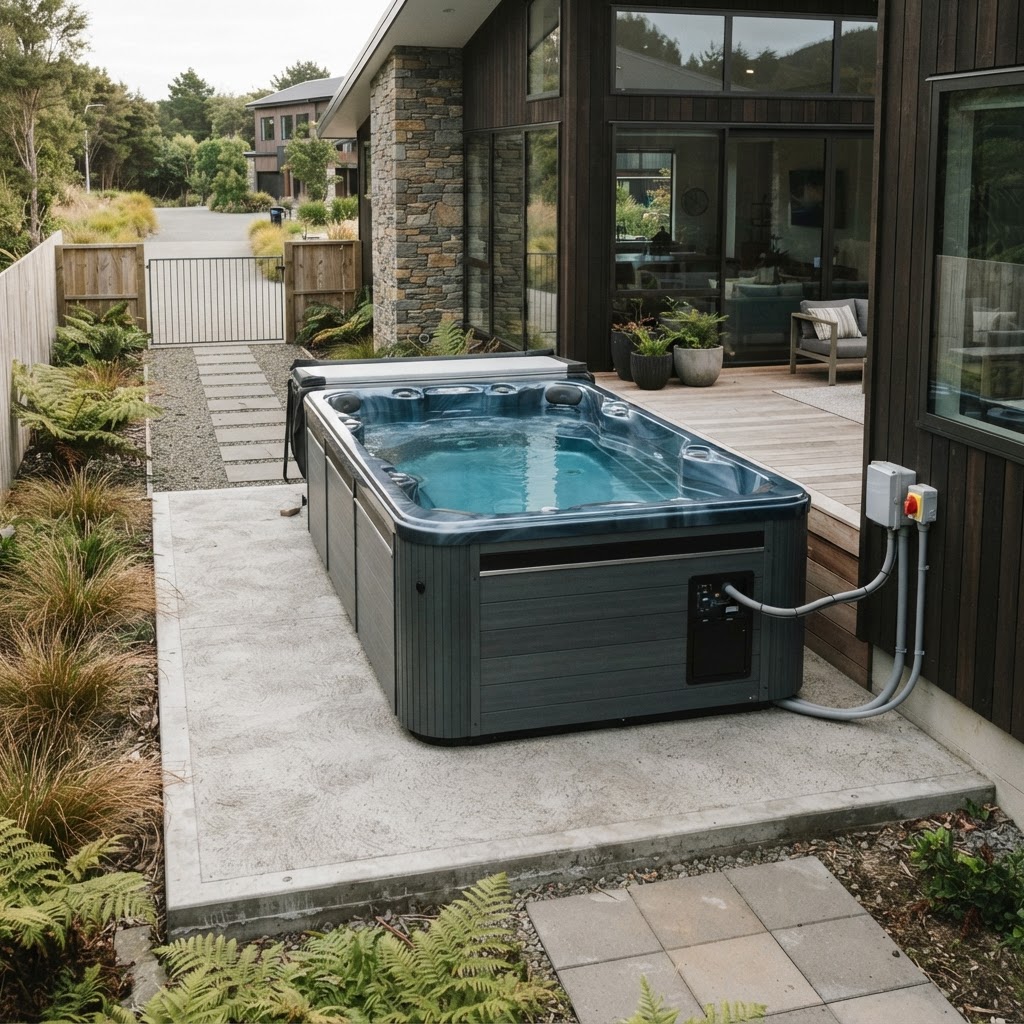
A filled swim spa is extremely heavy, so it needs a level, stable, load-bearing surface. In most installations, that means a properly engineered concrete pad designed for the filled weight and local conditions. A compacted gravel base may be suitable for certain installations only when approved by the manufacturer and a qualified professional.
The pad should be level, adequately sized, and accessible for future service. Do not place a swim spa directly on grass, soil, an aging deck, or an unverified paver surface. Review the complete swim spa installation and site-preparation guide before construction begins.
What electrical service does a swim spa require?
Many swim spas require a dedicated 50-amp or 60-amp electrical circuit, although the exact specification depends on the heater, pumps, propulsion system, and accessories. A licensed electrician should verify the load, disconnect location, conduit path, grounding, and local code requirements before delivery.
Electrical planning should happen before the foundation is poured. Confirm whether the spa can operate all pumps and the heater simultaneously, or whether the controls use load shedding. Never use extension cords or share the circuit with other high-load equipment.
How is a swim spa delivered?
Delivery may involve a lift-gate truck, specialized spa cart, forklift, or crane. The best method depends on the unit’s dimensions, filled-free access route, gates, slopes, overhead wires, fences, and distance from the delivery vehicle to the foundation. Measure the narrowest point on the route, including turns and gate openings.
Some properties require a crane to lift the swim spa over a home or wall. Crane placement, permits, traffic control, and scheduling are normally separate considerations. Review Hearthside Supply’s Delivery & Shipping information and confirm the delivery plan before ordering. Customers in large service areas, including California, should also check local access, electrical, and permitting requirements.
Safety, Health, and Exercise Questions
Are swim spas safe for aquatic exercise?
For many people, aquatic exercise is a comfortable, low-impact workout because buoyancy reduces loading on the joints while water resistance challenges the muscles. Swim spas may support water walking, gentle mobility work, endurance training, and rehabilitation. Physical therapy or aquatic therapy should be performed under guidance from a qualified clinician when recovering from an injury or managing a medical condition.
Start with a low current speed, maintain stable body position, and increase duration gradually. Use handrails and steps carefully, keep the water temperature appropriate for the activity, and avoid swimming alone. A tether system can provide additional positioning support during training.
What temperature is best for swimming versus hydrotherapy?
Training water is generally more comfortable at a cooler temperature than a hot tub section because vigorous exercise raises body heat. Hydrotherapy and relaxation are typically more enjoyable in warmer water. A dual-zone model is useful when household members want different temperatures at the same time.
Follow the manufacturer’s temperature limits and your healthcare provider’s recommendations. Children, pregnant individuals, older adults, and anyone with cardiovascular or other health concerns should consult a medical professional about safe water temperatures and session length.
Can a swim spa help with rehabilitation or physical therapy?
The combination of buoyancy and water resistance can support controlled movement, balance practice, range-of-motion exercises, and gradual conditioning. However, a swim spa is not a substitute for professional diagnosis or treatment. If rehabilitation is a primary goal, look for stable entry steps, handrails, adjustable current control, accessible seating, and a therapy zone that allows precise temperature management.
Maintenance and Year-Round Operation Questions
How often does a swim spa need maintenance?
Maintenance includes testing and balancing the water, cleaning the filter, inspecting the cover, monitoring the water level, and periodically draining and refilling the vessel. Usage, bather load, climate, and sanitizer choice determine the exact schedule. A filtration cycle removes suspended particles, but it does not replace proper water chemistry.
Follow the manufacturer’s recommendations for sanitizer, pH, alkalinity, and shock treatment. Salt systems, ozone, and UV sanitizers can support water care, but they do not eliminate the need for testing or balanced chemistry. Keep the cover clean and inspect its seals so it continues to support heat retention.
How do I keep a swim spa clean?
Shower before entering, keep leaves and debris away from the water, rinse the filter as directed, and remove the cover carefully so dirt does not fall into the vessel. Clean the waterline and cabinet with products approved for spa surfaces. Avoid household cleaners that can damage acrylic, alter water chemistry, or leave residues.
Drain-and-refill intervals vary by model and use. If water becomes difficult to balance, develops persistent odor, or shows unusual clarity issues, inspect the filter and plumbing and consult a qualified service professional.
Can a swim spa operate during winter?
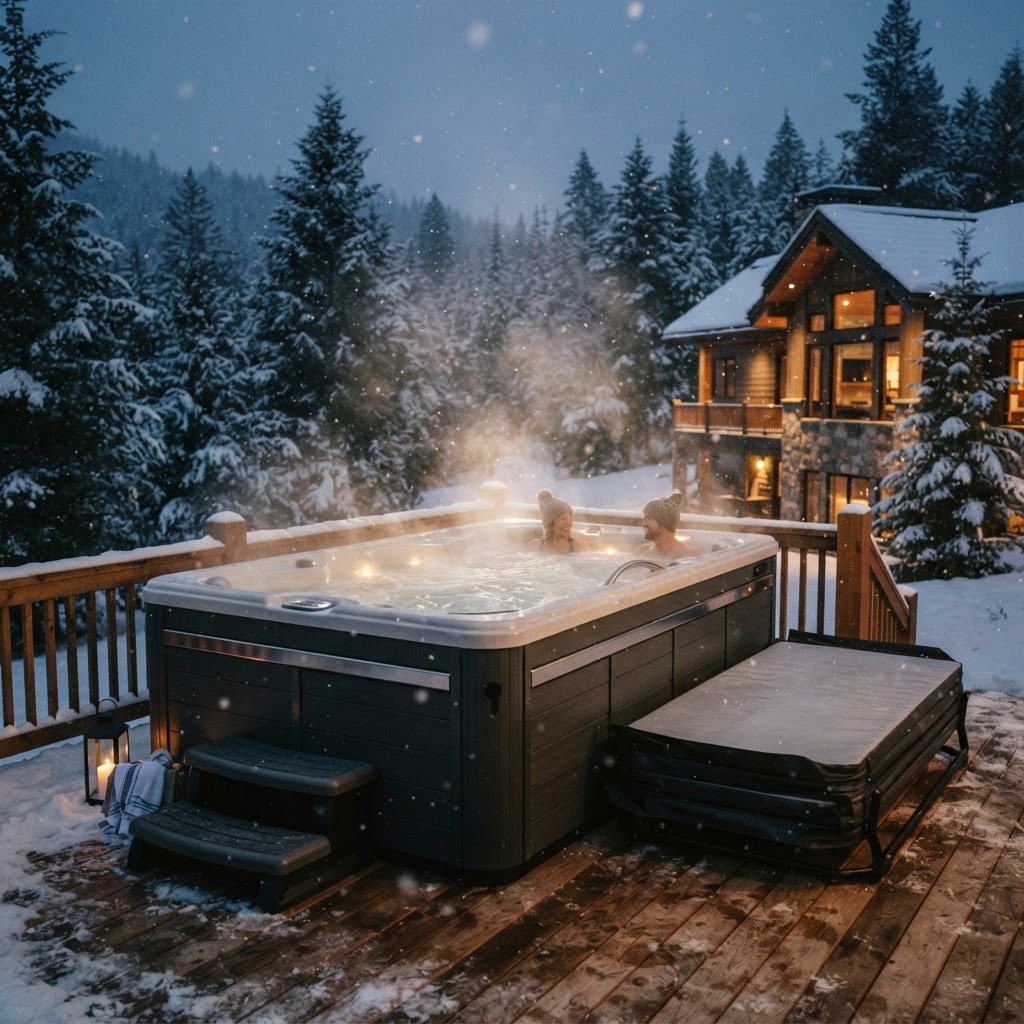
Yes. Swim spas are designed for year-round use when the heater, insulation, cover, and freeze-protection systems are maintained properly. Winter operation requires keeping the spa powered, maintaining the correct water level, checking the thermal cover for gaps, and monitoring for alerts during prolonged freezing weather.
Never drain a swim spa and leave it exposed in freezing conditions unless the manufacturer’s winterization procedure has been followed completely. Water trapped in pumps and plumbing can freeze and cause damage. For more detail, read Year-Round Swimming: Heating and Insulating a Swim Spa.
Buying Questions
What features matter most when choosing a swim spa?
Prioritize the features that match your main use. Serious swimmers should compare current width, current speed, propulsion design, adjustment range, and the ability to maintain consistent flow. Families may value seating, steps, lighting, and a hot tub section. Recovery-focused buyers should examine therapy jets, ergonomic seats, handrails, water temperature control, and easy entry.
- For swimming: broad counter-current flow, stable propulsion, adjustable speed, and adequate hull length.
- For fitness: an optional tether, resistance accessories, underwater lighting, and space for aquatic exercise.
- For relaxation: hydrotherapy jets, contoured seating, comfortable headrests, and a dedicated therapy area.
- For efficiency: effective insulation, a fitted thermal cover, an efficient heater, and well-designed filtration.
- For convenience: intuitive controls, dependable water-care options, service access, and strong warranty coverage.
Should I choose a single-zone or dual-zone swim spa?
A single-zone model is usually simpler and may be more economical when everyone uses the spa for the same purpose. A dual-zone swim spa is more versatile because it can maintain different temperatures for swimming and soaking. The tradeoff is a larger footprint, more complex equipment, and potentially higher purchase and operating costs.
Compare the actual dimensions, plumbing layout, energy requirements, and usable seating rather than choosing based only on the word “dual-zone.” Our guide to dual-zone swim spas explains where the added flexibility is most valuable.
What warranty and service questions should I ask?
Ask what is covered for the shell, structure, plumbing, pumps, heater, cabinet, and labor, and whether coverage changes for residential versus commercial use. Also clarify who handles service, whether replacement parts are readily available, and what maintenance responsibilities could affect coverage. Review the retailer’s warranty information before purchase.
Related Reading
Continue researching with these in-depth swim spa resources:
- Swim Spa Buying Guide: Currents, Size, and Year-Round Use
- Exercise Swim Spa Features for Low-Impact Training
- Swim Spa Installation: Site Prep, Electrical, and Foundation Guide
- How to Compare Swim Spa Brands Before You Buy
FAQ
How long does a swim spa last?
A well-built swim spa can provide many years of service when its water chemistry, cover, pumps, heater, and cabinet are maintained correctly. Longevity depends on construction quality, climate, installation, and usage.
Can you swim in a swim spa without a current?
Yes. You can use a swim spa for water walking, stretching, recreation, resistance exercise, or relaxation without activating the swim current. A current is necessary for stationary swimming but not for every aquatic workout.
Does a swim spa need to be indoors?
No. Outdoor installation is common and allows convenient year-round access. Choose a stable foundation, plan for drainage and electrical safety, and use a properly fitted insulated hard cover to protect heat retention and water quality.
Is a swim spa difficult to maintain?
Routine care is manageable when you establish a regular schedule for water testing, filter cleaning, surface care, cover inspection, and periodic draining. Automated water-care features can simplify maintenance but do not replace testing.
Ready to invest in your home wellness?
A swim spa can combine endurance training, low-impact movement, hydrotherapy, and relaxation in one carefully planned installation. Explore Hearthside Supply’s Swim Spas collection, or compare complementary Hot Tubs, Cold Plunges, Saunas, and Steam Showers for a complete home wellness environment. If you are adding a sauna to your routine, products such as the HUUM Cliff 9 kW heater or HUUM Hive 12 kW heater may be worth exploring based on room size and sauna design.
For help comparing configurations, delivery requirements, or installation planning, call +1 (253) 264-2435, email sales@hearthsidesupply.com, or talk to a specialist.
Ready to invest in your home wellness?
Explore our curated selection of premium saunas, hot tubs, cold plunges, steam showers, and swim spas — with clear specifications, nationwide delivery, and secure checkout.
Keep reading
View all posts
 Swim Spas
Swim Spa Covers and Insulation: Keeping Heat In and Costs Down
Maximize your swim spa investment with expert tips on insulation and covers. Learn how to maintain heat, reduce energy costs, and ensure year-round performance.
Read article
 Swim Spas
What Is a Swim Spa: Everything You Need to Know
Discover what a swim spa is, how these versatile aquatic machines work, and why they are the perfect hybrid solution for fitness and relaxation at home.
Read article
 Swim Spas
How Much Does a Swim Spa Cost to Run Per Month? A Budgeting Guide
Curious about the monthly swim spa operating cost? Our guide breaks down energy, water, and maintenance expenses for year-round backyard wellness.
Read article