
How to Choose an Outdoor Swim Spa for Year-Round Use
How to Choose an Outdoor Swim Spa for Year-Round Use — Wellness
A swim spa that works well in July may need more planning for January. Learn which insulation, heating, site preparation and operating-cost details to verify before choosing a model for year-round use.
An outdoor swim spa can give you space to swim, exercise and relax without installing a full-size pool. But choosing one for year-round use takes more than comparing dimensions and jet counts. The right model must suit your climate, maintain your preferred water temperature and remain practical to access and service during colder months.
Before buying, look beyond labels such as “all-season” or “winter-ready.” Ask for model-specific documentation on insulation, heating, freeze protection and installation requirements. Then compare the complete installed cost, including the foundation, electrical work, cover and delivery arrangements. This guide explains which details deserve the most attention.
What makes an outdoor swim spa suitable for year-round use?
Year-round suitability depends on the entire installation, not just the heater. A well-insulated vessel can still be inconvenient in winter if its cover is difficult to remove, its equipment panels are inaccessible or the path from your house becomes slippery.
Start by defining how you expect to use the spa. Regular swimming, occasional water exercise and warm-water lounging place different demands on temperature control and layout. Your local conditions matter just as much: prolonged freezing temperatures require different planning than mild winters and very hot summers.
Before shortlisting models, establish four priorities:
- Your intended use: Lap-style swimming against a current, gentle movement, relaxation or a combination.
- Your preferred temperature: Decide whether swimming comfort or warmer seated relaxation comes first.
- Your climate: Account for winter lows, summer heat, wind exposure and snowfall.
- Your operating commitment: Consider routine care, electricity costs and who will monitor the spa when you travel.
An outdoor swim spa should come with clear operating instructions that address your conditions. Ask the seller for the manufacturer's documented operating limits and cold-weather procedures before treating any model as suitable for continuous winter use.
Choose the swimming experience before choosing the footprint
A larger shell does not automatically produce a better swim. Current quality, usable swimming space and the position of seats or steps all affect how comfortably you can exercise.
Ask how the current is generated and adjusted. You want to understand whether its range suits your ability, how evenly it reaches your body and whether it creates turbulence that makes maintaining position difficult. Jet counts and pump horsepower alone do not answer those questions.
If a wet test is available, try the model at the pace you would normally use. Otherwise, request a demonstration and detailed information about the current system. Check the unobstructed swimming area rather than relying only on exterior dimensions.
Temperature deserves equal attention. Water that feels comfortable for seated relaxation may feel too warm during sustained exercise. A single-zone model shares one water temperature across its swimming and seating areas. Some dual-zone designs offer separate temperature control, but you should verify that capability for the specific model rather than assume it from the name.
Choose an outdoor swim spa around your primary activity first. If swimming is the priority, do not sacrifice usable swim space for extra seats you are unlikely to use. Hearthside Supply's guide to comparing swim spa brands offers additional questions about current quality and construction.
Evaluate insulation, the cover and cold-weather heating together
Insulation slows heat loss, the cover protects the water surface and the heating system replaces lost heat. These components need to work together. A powerful heater is not a substitute for a well-protected vessel and a properly fitted cover.
Ask what is insulated and how service access works
Request an explanation of the insulation system, including how the shell, cabinet and equipment area are protected. Terms such as “full foam” or “thermal cabinet” describe approaches, but they do not establish the actual performance of a particular model.
Also ask how technicians reach plumbing and equipment. Insulation design can affect leak detection and repair access, so evaluate maintainability alongside heat retention.
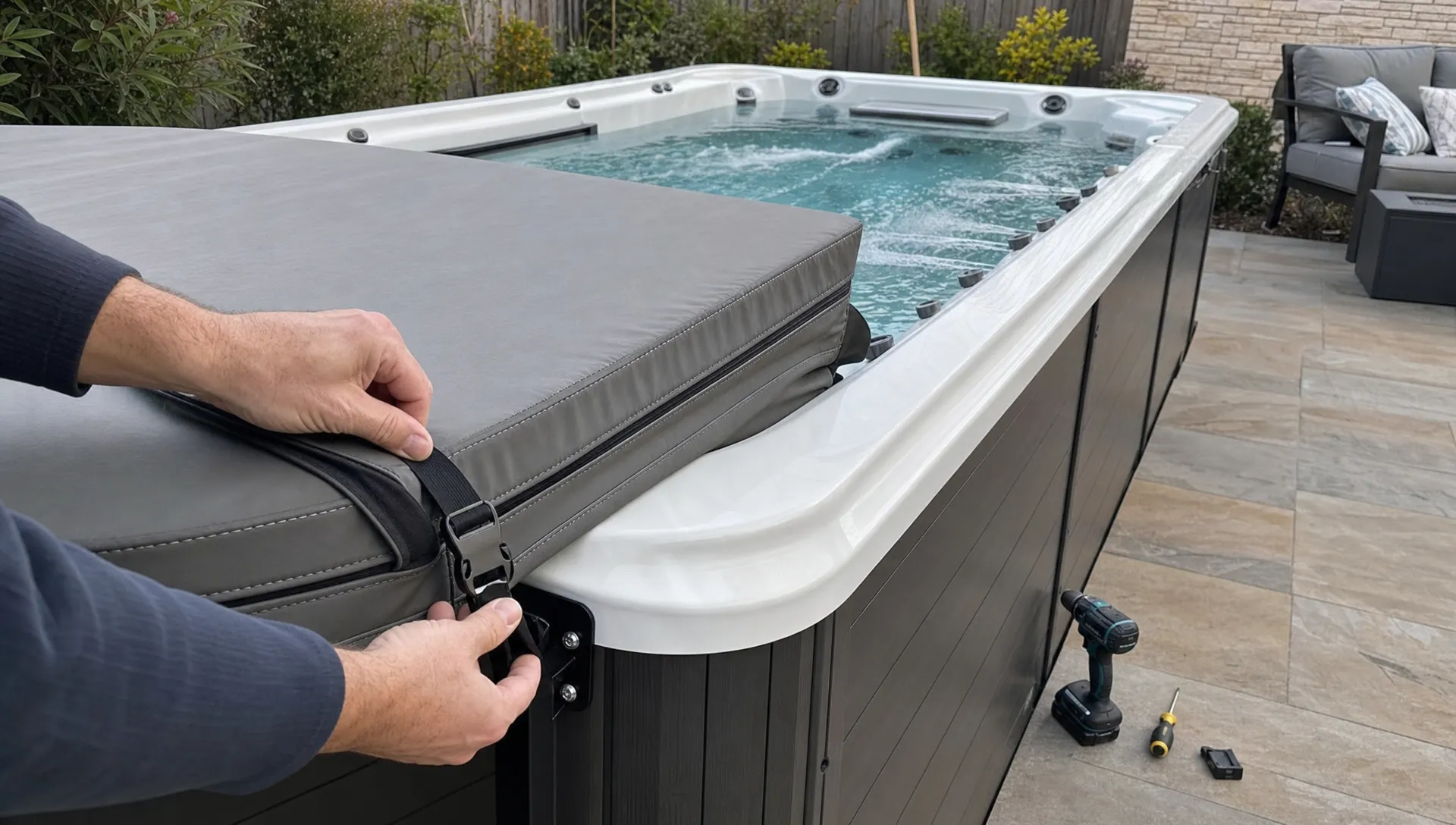
For the cover, verify its construction, fit, securing method and handling requirements. Understand how you will remove and store every section. A cover that is cumbersome to open can discourage frequent use, especially in cold weather.
Verify heating behavior during normal use
Ask whether the heater can operate while the swim system is running. Some equipment configurations manage electrical loads in ways that affect simultaneous operation. Confirm what applies to your exact model and electrical installation.
Request any available performance information showing the test conditions, including ambient temperature, water temperature and whether the cover was closed. Results from mild weather should not be treated as a prediction for a freezing, windy evening.
For an outdoor swim spa, the useful question is whether it can maintain your target temperature under your expected conditions, not simply how quickly it warms up in favorable weather. In hot climates, also check the lowest practical water temperature and whether active cooling is available or required.
Compare operating costs using realistic assumptions
Purchase price is only part of the budget. Heating, circulation, swim-system use and water care all contribute to ownership costs, and those costs vary with climate and habits.
Ask for model-specific energy information where available. Any estimate should identify the assumptions behind it: outdoor temperature, temperature setting, cover use and operating schedule. A monthly figure without those details is difficult to compare fairly.
The basic electricity calculation is:
Monthly electricity cost = monthly energy use in kilowatt-hours × your electricity rate per kilowatt-hour.
For illustration only, 1,000 kWh at $0.18 per kWh would cost $180. That is a calculation example, not a forecast for any product. Use your utility's applicable rate, including variable charges where relevant, and energy data that reflects the model and conditions you are considering.
For an outdoor swim spa, build a budget that separates the upfront installation from recurring expenses. Include water-care products, filters, water replacement and eventual cover replacement, without assuming the same service interval for every model.
Lowering the temperature during extended periods of nonuse may reduce heat loss, but reheating takes time and energy. Follow the manufacturer's guidance, particularly during freezing weather. Do not turn off circulation or power merely to reduce a utility bill.
Plan the site for winter access and future repairs
The best location balances convenient access, structural support and room for servicing. Measure the entire working area, not just the shell footprint.
Foundation, drainage and delivery access
Use the manufacturer's requirements to plan the supporting base. A filled spa, its equipment and its occupants create a substantial load. Existing patios or decks should not be assumed adequate without an appropriate assessment; elevated installations require particular attention from a qualified structural professional.
Grade and drainage also matter. Keep runoff from collecting around the cabinet and plan where drained water can legally go. Avoid placing the unit where roof runoff, falling ice or accumulated snow creates a predictable problem.
Confirm the delivery route before ordering an outdoor swim spa. Gates, corners, overhead wires, slopes and lifting access can affect placement. Ask exactly what the delivery service includes and whether unloading, a crane or final positioning must be arranged separately.
Electrical work, clearances and the route from your house
Have a licensed electrician review the model's requirements and applicable local rules. Verify the electrical supply, required circuit protection, grounding, bonding and disconnect arrangements. Do not assume an existing hot tub circuit will suit a larger unit.
Reserve every manufacturer-required service clearance, including space behind removable panels. Decking or landscaping should not permanently block equipment access.
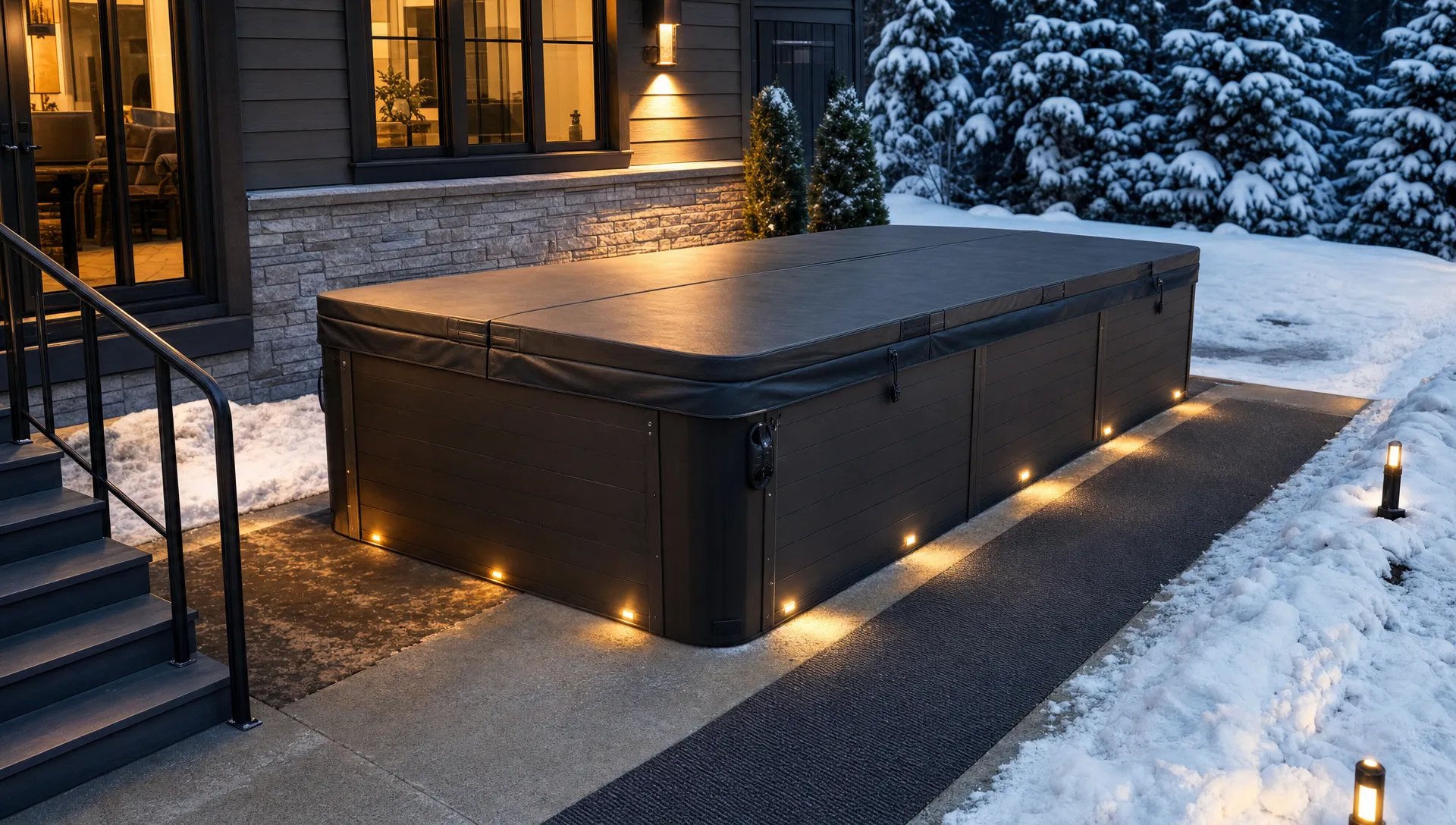
Finally, walk the route you will take in winter. Plan slip-resistant surfaces, suitable lighting and manageable cover storage. A windbreak may improve comfort, but it must preserve required clearances and access. Check local permits, setback rules and pool or spa barrier requirements before construction.
Understand freeze protection and power-outage procedures
Freeze protection is not the same as protection against every winter emergency. Automatic controls generally depend on working equipment and an available power supply. An outage or circulation failure can create a different situation from normal cold-weather operation.
Before purchase, request written answers about low-temperature operation, warning messages and the steps to take if heating or circulation stops. Ask who provides service in your area and how to contact support outside routine business hours, without assuming emergency availability.
An outdoor swim spa also needs a plan for periods when nobody is home. Decide who can check it during prolonged cold weather and what they should do if an alarm appears. If a monitoring feature is offered, confirm what it actually detects and whether it requires connectivity, a subscription or additional equipment.
Do not assume draining the vessel alone makes it safe to leave unused through winter. Water can remain in plumbing and equipment. Proper winterization is model-specific and may require professional service.
If you expect to shut the spa down seasonally, review that procedure before buying. For ongoing ownership tasks, Hearthside Supply's seasonal swim spa maintenance checklist can help you organize routine care alongside the manufacturer's instructions.
Use a written checklist to compare shortlisted models
Ask each seller for the same information. Written, model-specific answers are more useful than broad claims about durability or efficiency, particularly when winter use is central to your decision.
| Buying factor | Information to request | Why it matters year-round |
|---|---|---|
| Climate suitability | Documented operating limits and cold-weather instructions | Establishes whether the model suits your conditions |
| Heating behavior | Heater operation during swimming and any load-management restrictions | Helps assess temperature maintenance during use |
| Insulation | Description of shell, cabinet and equipment-area protection | Clarifies heat-retention design and service access |
| Cover | Included components, securing method and handling requirements | Affects heat loss, safety and everyday convenience |
| Temperature control | Single-zone or independently controlled zones | Determines whether swimming and lounging preferences can coexist |
| Installation | Filled weight, base requirements, electrical needs and service clearances | Supports an accurate site plan and installation budget |
| Winter support | Outage instructions, winterization procedure and service arrangements | Helps you plan for equipment problems and absences |
When comparing an outdoor swim spa, record the complete delivered and installed cost separately from the advertised product price. Note which accessories are included, which are optional and which your site requires.
A cover lift, stable steps or a suitable handrail may influence daily convenience more than a cosmetic upgrade. The guide to swim spa accessories that improve everyday use can help you evaluate those additions without treating every accessory as essential.
Keep optional indoor wellness upgrades separate from the core budget
Some homeowners want an indoor relaxation option alongside their backyard swimming space, particularly when severe weather makes outdoor access unpleasant. Treat that as a separate project rather than allowing it to consume the budget needed for insulation, electrical work or a suitable foundation.
If an indoor steam shower is part of your plan, the Thermasol Upgraded Round Digital Steam Shower Kit TWP10UR and Luxury Bath Supply Platinum 3 Person Walk-In Steam Shower DZ934 are products to review within that separate comparison. Check their specifications, included components and room, plumbing, ventilation and electrical requirements before choosing either.
Neither replaces the swimming function of an outdoor swim spa. Budget for the outdoor installation first, then decide whether an indoor steam space fits your home and intended routine. This keeps your purchase focused on reliable year-round swimming rather than expanding the project before its essential costs are clear.
Frequently asked questions
Can every swim spa be used outdoors in winter? No. Suitability depends on the model's documented operating limits, insulation, heating system and installation. Confirm the manufacturer's requirements for your climate rather than relying on an “all-season” description alone.
Is a dual-zone model better for year-round use? It can be useful when swimmers and seated users prefer different temperatures. However, separate temperature control must be verified for the specific model. It does not remove the need to assess insulation, heating performance and winter procedures.
Should I drain the spa before freezing weather? Follow the manufacturer's instructions. A model intended for continuous winter operation may be kept filled and running, but draining for shutdown requires proper winterization. Emptying the vessel alone can leave water in vulnerable plumbing and equipment.
What matters most when choosing an outdoor swim spa for a cold climate? Prioritize documented climate suitability, heat retention, a manageable cover, heating behavior during use and a clear outage plan. Convenient winter access and available service support also belong in the decision.
Does a cover replace a safety barrier? Do not assume it does. Check local requirements and the cover's stated safety compliance. Follow the U.S. Consumer Product Safety Commission's Pool Safely guidance on barriers and supervision, especially where children may access the area.
Make the purchase around documented requirements
Choose the model that fits your swimming habits, local weather and complete installation budget. Before ordering, confirm five essentials in writing: climate suitability, heating behavior, foundation requirements, electrical requirements and winter shutdown or outage procedures.
When you shop swim spas and home wellness products at Hearthside Supply, use those requirements to guide your comparison. Review the exact product specifications and ask for clarification wherever an installation or cold-weather detail is missing. A well-planned purchase should make year-round use practical, not leave essential questions to be solved after delivery.
Ready to invest in your home wellness?
Explore our curated selection of premium saunas, hot tubs, cold plunges, steam showers, and swim spas — with clear specifications, nationwide delivery, and secure checkout.
Keep reading
View all posts
 Wellness
Longevity and Wellness: Investing in a Home Spa for Healthspan
Discover how a home spa supports longevity and wellness. Learn how heat therapy and contrast bathing improve your healthspan and daily recovery routine.
Read article Wellness
What to Know Before Buying Pre-Owned Hot Tubs
A low asking price can hide costly leaks, outdated parts or a difficult move. Use this buyer's checklist to evaluate condition, verify ownership and compare a used hot tub with a new one.
Read article
 Wellness
How to Build a Home Recovery Room: Layout, Ventilation, and Flow
Transform your space into a sanctuary with our guide to designing the perfect home recovery room for contrast therapy, relaxation, and long-term health.
Read article