
Swim Spas vs Lap Pools for Home Swimming
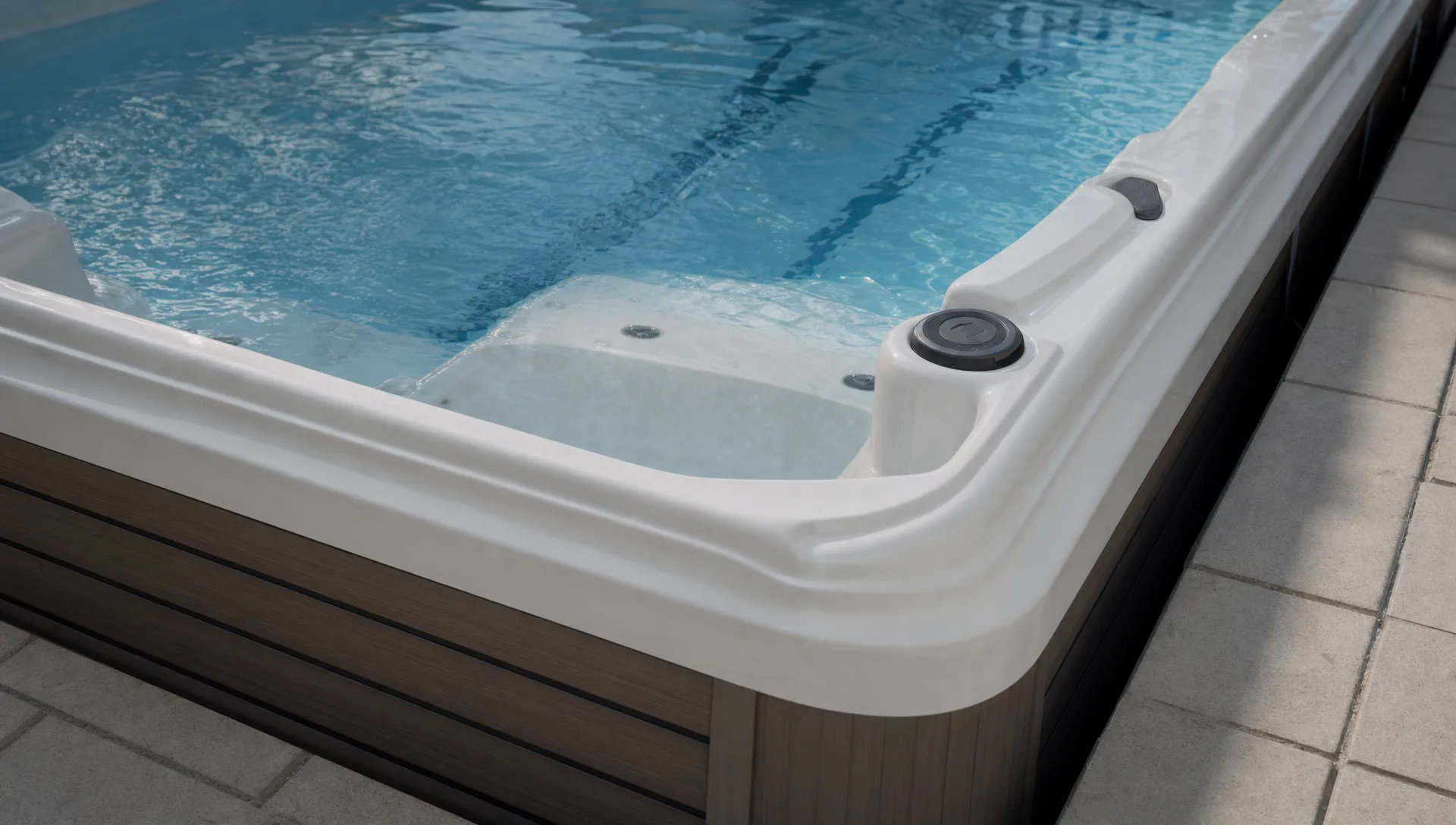
Swim Spas vs Lap Pools for Home Swimming — Wellness
A compact footprint does not guarantee a better swim, and a longer pool does not guarantee better value. Compare training feel, installation demands and ongoing upkeep before choosing your home swimming setup.
For home swimming, swim spas offer a compact way to swim against a current, while lap pools provide a lane for swimming lengths and practicing turns. The better choice depends on how you train, how much usable space you have and what you are prepared to spend on installation and ownership.
Choose a swim spa when space is limited and continuous, stationary swimming suits your routine. Choose a lap pool when traveling through the water, pushing off the wall and practicing turns are priorities. Neither option wins on purchase price alone: site preparation, heating, access and maintenance can change the comparison substantially.
How swim spas compare with lap pools
A swim spa creates resistance through a powered current, allowing you to swim while staying in roughly the same position. A conventional lap pool gives you a long, narrow swimming area, with a wall at each end for turns.
| Buying consideration | Swim spa | Conventional lap pool |
|---|---|---|
| Swimming style | Continuous swimming against a current | Swimming lengths with wall push-offs and turns |
| Space requirement | Compact swimming footprint, plus access and service clearance | Longer swimming footprint, plus deck space and equipment access |
| Training priorities | Sustained effort, current-based workouts and stationary drills | Lap counting, pacing over a known distance and turn practice |
| Installation | Often delivered as a manufactured unit; foundation, utilities and placement still matter | In-ground designs typically involve excavation and site construction |
| Temperature planning | Check heating capacity, insulation and water-zone controls | Check heating design, cover options and seasonal expectations |
| Relaxation use | Depends on seating and features of the selected model | Depends on pool layout and any separate spa provision |
For many homeowners, swim spas solve a space problem rather than replace every part of the pool experience. A serious swimmer should evaluate the current first, while a lap-pool buyer should establish a useful swimming length before committing to a backyard design.
Swimming experience: continuous effort or full laps?
A current changes how you swim
Stationary swimming removes regular wall push-offs and turns. That can suit uninterrupted exercise, but it feels different from moving down a lane. Current width, smoothness and adjustability affect how easily you hold your position and maintain your stroke.
A powerful current is not automatically a comfortable one. A narrow stream may require frequent corrections, and a setting that works for freestyle may not suit breaststroke or a slower swimmer. Different household members should test the system if they plan to share it.
When you test swim spas, swim long enough to assess the experience beyond the first minute. Try your normal stroke at an easy pace, then increase the effort and check whether you remain centered without constantly changing your technique.
Hearthside Supply’s explanation of propulsion and jet-based swim currents can help you identify the differences to investigate during a demonstration.
A lap pool preserves distance and turns
A lap pool lets you travel through the water, count lengths and practice wall skills. Those benefits matter if you enjoy conventional lap swimming or want your home sessions to resemble pool-based training.
However, a short residential lane introduces frequent turns. Before selecting dimensions, consider how many strokes you want between walls. Also check usable width, depth and whether steps or ledges interrupt the lane. A long-looking pool is not necessarily a well-designed swimming pool.
Space, delivery access and installation
The footprint advantage of swim spas can be meaningful in a smaller yard, but the shell dimensions are only the starting point. You also need room for entry steps, cover handling, maintenance access and safe movement around the unit.
For a lap pool, map the swimming lane alongside the surrounding deck, fencing and equipment location. Landscaping, retaining walls and setbacks may reduce the usable area more than you expect.
Check the route into the yard
A manufactured unit needs a workable delivery and placement plan. Side-yard width, overhead obstructions, slopes and crane access can affect the project. Ask who is responsible for placement, what the delivery service includes and whether a site inspection is needed.
An in-ground lap pool creates a different access challenge: excavation equipment, removed soil and construction materials must reach the site. Compare disruption as well as the finished footprint.
Have qualified contractors confirm the foundation, drainage and electrical requirements for either option. An existing patio should not be assumed suitable without checking its construction and the expected load.
Plan the space you will use every day
Keep towels and clothing in a dry changing area rather than beside splash-prone surfaces. For a swim-and-walk routine, a bench and enclosed storage can keep everyday footwear, including casual sneakers from BigBoiSneakers, dry between activities. Use footwear suitable for wet surfaces on the pool deck.
These details do not change the swimming system, but they can determine whether the setup is convenient enough to use regularly.
Compare total installed cost, not just the advertised price
Compare swim spas and lap pools using written, site-specific quotes that separate the swimming system from the work needed to make it usable. A lower equipment price can lose its advantage if delivery, foundation work or utility upgrades are substantial.
Avoid treating a packaged-unit quote and a pool-construction quote as equivalent until you understand their exclusions.
| Budget category | What to confirm in each quote |
|---|---|
| Equipment or pool structure | Exact model or construction scope, included components and optional features |
| Site preparation | Foundation or excavation, drainage, grading and soil removal |
| Delivery and placement | Freight arrangements, access requirements, lifting equipment and placement responsibility |
| Utilities | Electrical work, heating equipment and any required plumbing |
| Surroundings and safety | Steps, decking, barriers, covers and applicable permit requirements |
| Ongoing ownership | Energy, water treatment, filters, servicing and replacement components |
Ask each supplier for operating estimates based on the same assumptions: your climate, target water temperature, swimming schedule and cover use. Otherwise, the figures may describe very different ownership patterns.
A compact unit may hold less water than a long pool, but water volume alone does not determine the energy bill. Insulation, exposed surface area, heating equipment and outdoor conditions also matter.
For long-term budgeting, ask which components are serviceable, who handles repairs locally and what warranty exclusions apply. Review the written terms rather than relying on a general description of coverage.
Year-round use and water temperature
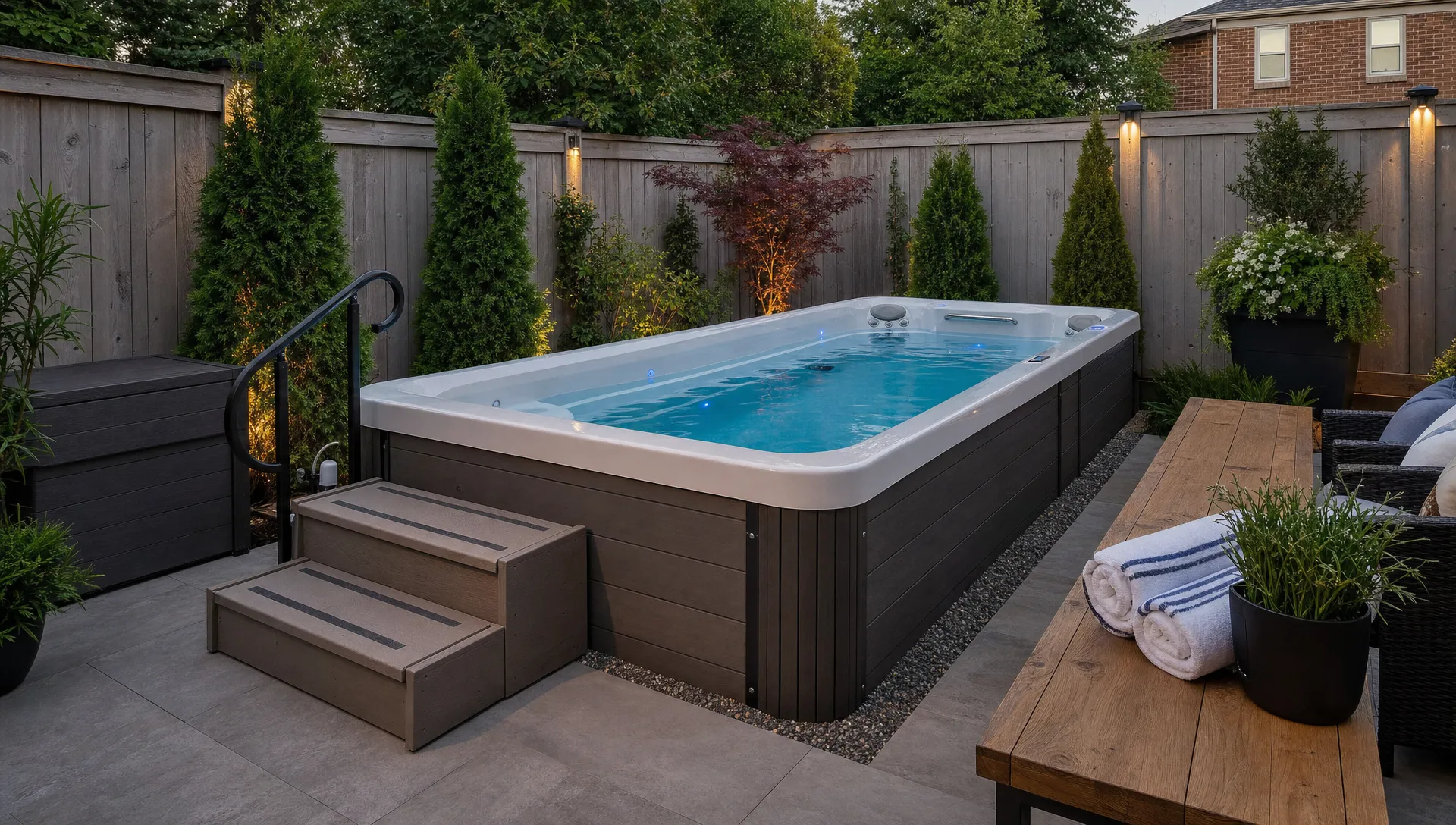
Outdoor swim spas can be practical for frequent use, but year-round performance depends on the selected model and installation. Check insulation, cover fit, heating capacity and the manufacturer’s instructions for freezing conditions.
A heated lap pool can also extend the swimming season. Its suitability depends on climate, heating design, cover use and the cost you are willing to accept. Do not assume either option is economical to keep warm simply because year-round operation is technically possible.
Swimming and soaking have different requirements
Water that feels comfortable for a relaxed soak may feel too warm during sustained swimming. If one person wants exercise and another wants hot-water relaxation, establish how the system will accommodate both uses.
For a model advertised with separate swimming and soaking areas, verify whether the water zones have genuinely independent temperature controls. Seating alone does not establish separate temperature management.
Also plan the journey from the house to the water. A sheltered changing area, appropriate lighting and a clear walking route can matter as much as heating during colder months.
For a closer look at the equipment and weather-related questions, use Hearthside Supply’s guide to choosing an outdoor swim spa for year-round use.
Maintenance and safety responsibilities
Although swim spas are compact, they still require consistent water care. Both options need a plan for testing, sanitizing, filtration and cleaning, following the equipment instructions and appropriate water-treatment guidance.
Compare the work involved rather than assuming the smaller system is maintenance-free. Ask how filters are accessed, how covers are handled and how water is drained or replenished. For a lap pool, include surface cleaning and any additional equipment specified in the design.
Make maintenance access part of the layout
A unit tightly surrounded by permanent decking can become difficult to service. Before construction, identify the panels, pumps and connections that technicians need to reach. Preserve the required clearances in the final design.
Also ask about replacement filters, cover availability and local service support. These are practical ownership questions, not minor accessories to address after delivery.
Neither option removes the need for water safety
A compact swimming area still presents drowning risks. The U.S. Consumer Product Safety Commission’s Pool Safely guidance emphasizes barriers and close supervision as parts of water safety.
Confirm local requirements for fencing, gates, covers and access control before installation. Do not assume an ordinary insulating cover qualifies as a safety cover. Current controls and shallow-looking water are not substitutes for supervision or appropriate barriers.
Which option fits your household?
Choose swim spas when you want a dedicated exercise area without allocating a long section of the yard to a swimming lane. This choice is strongest when you enjoy current-based swimming, have tested the system and can provide suitable installation access.
Choose a lap pool when swimming lengths is the main goal and your site can accommodate a lane you will actually enjoy. It is particularly relevant when turns, wall push-offs and distance-based workouts are part of your routine.
| Your main priority | Option to investigate first |
|---|---|
| Continuous swimming in a compact area | A swim spa with a current you have tested |
| Traditional laps and turn practice | A lap pool with sufficient usable length |
| Swimming plus warm-water relaxation | A design with clearly verified temperature arrangements, or separate equipment |
| Lowest overall project cost | Both, using comparable installed quotes |
| Frequent cold-weather use | Both, with climate-specific heating and cover planning |
If your real priority is relaxing soaks rather than swimming, a hot tub may be a more appropriate category. The Cyanna Valley Spas 102 PNP Hot Tub is one option to review separately. Check its current specifications, installation requirements and available space before deciding; a hot tub should not be treated as a substitute for a swimming lane.
Frequently asked questions
Can swim spas replace lap pools for training? They can support current-based swimming workouts, but they do not reproduce traveling through a lane, wall push-offs or turns. Whether that trade-off works depends on your goals and how comfortably you swim against the selected current.
Is a lap pool always more expensive? No universal comparison is reliable without project details. Pool construction, manufactured-unit placement, site access, utility work and surrounding improvements all affect the installed total. Get quotes with matching inclusions before deciding.
How much yard space do I need? Use the actual equipment or pool dimensions, then add required setbacks, barriers, access routes, service clearances and cover-handling space. A supplier’s product footprint is not the same as the complete installation footprint.
Can either option be installed indoors? Both may be possible, but indoor swimming projects require careful structural, moisture-control, ventilation and drainage planning. Have qualified professionals assess the room and building before purchasing equipment or approving construction.
Should I test the swimming experience before buying? Yes, particularly for a current-based system. A demonstration helps you assess stroke comfort, positioning and resistance. For a lap pool, swimming in a comparable lane length can help you judge how frequent turns will feel.
Make the decision around your swimming routine
The right purchase should fit your preferred workout, your site and your ownership budget. Shortlist swim spas only after confirming the current suits you, and shortlist lap-pool designs only after establishing a useful lane length.
When reviewing home swimming options with Hearthside Supply, bring your site measurements, access details and intended swimming routine. Those specifics will help you evaluate suitable equipment and identify the installation questions to resolve before ordering.
Ready to invest in your home wellness?
Explore our curated selection of premium saunas, hot tubs, cold plunges, steam showers, and swim spas — with clear specifications, nationwide delivery, and secure checkout.
Keep reading
View all posts
 Wellness
Steam Shower Benefits: Respiratory, Skin, and Relaxation Science
Discover the science-backed steam shower benefits for respiratory health, skin radiance, and stress relief. Elevate your wellness routine today.
Read article
 Wellness
Wellness Recovery for Every Age: Adapting Heat and Cold by Life Stage
Discover how to optimize your home wellness routine with heat and cold therapy tailored to every stage of life, from active recovery to senior longevity.
Read article Wellness
How to Choose an Outdoor Swim Spa for Year-Round Use
A swim spa that works well in July may need more planning for January. Learn which insulation, heating, site preparation and operating-cost details to verify before choosing a model for year-round use.
Read article